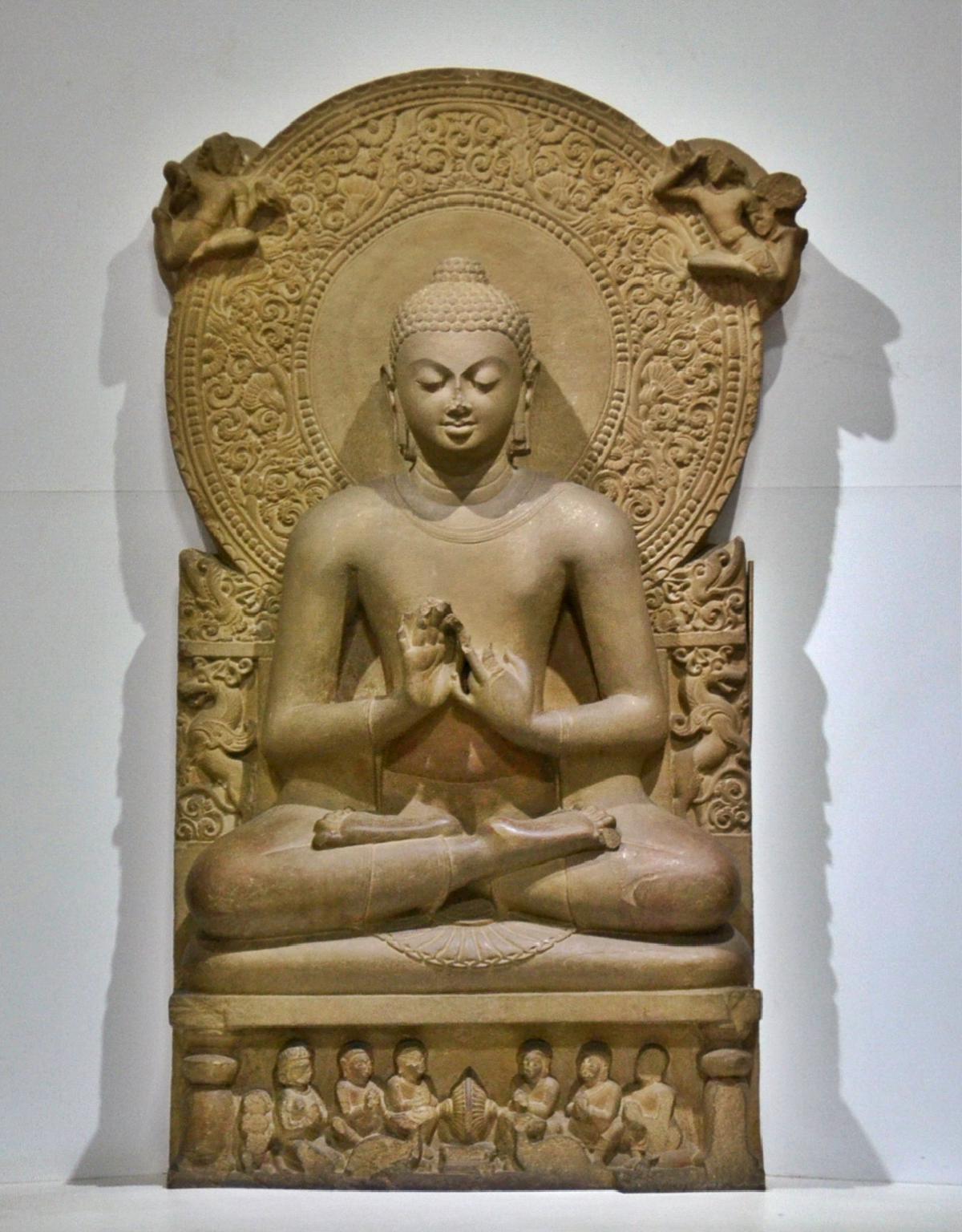
The full moon of the month of Vaisakha carries a special meaning for over five hundred million people around the world. Buddha Purnima, known in other traditions as Vesak, marks not one but three pivotal moments in the life of Siddhartha Gautama: the day he was born, the day he attained enlightenment under a pipal tree in Bodh Gaya, Bihar, and the day he passed from this world entirely. That all three are said to have occurred on the same full moon is considered no coincidence. It is called the Thrice Blessed Festival, and the moon that rises over Bhārat on this night carries the weight of all three.
The Prince Who Left the Palace


Around 563 BCE, a child was born in a garden at Lumbini, in present day Nepal. His mother, Queen Māyā, had stopped to rest beneath a sal tree while traveling, and tradition holds that the infant emerged and immediately took seven steps, each one leaving a lotus flower in its wake. The child’s father, King Śuddhodana of the Shakya clan, was told by a sage that his son would become either a great king or a great holy man. Determined to prevent the latter, he built a world of pleasure and comfort around the boy, named Siddhartha Gautama, and shielded him from every sight of suffering.
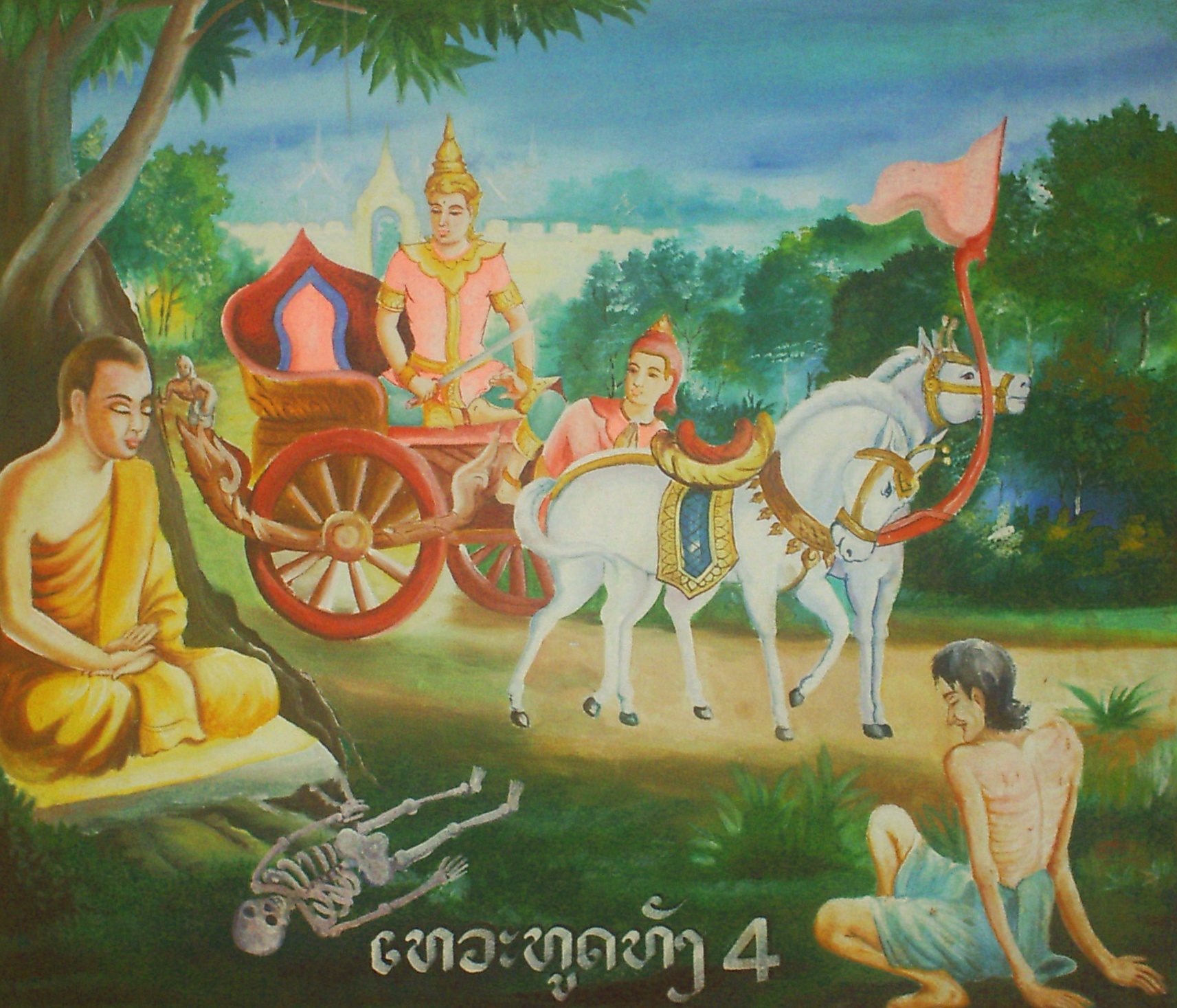

For nearly three decades, the prince lived within palace walls, surrounded by music, beauty, and ease. Then, on four chariot rides outside, he saw what his father had tried to hide from him: an old man, a sick man, a corpse, and finally a wandering ascetic who seemed, despite possessing nothing, to carry himself with calm and dignity. These are known in Buddhist tradition as the Four Sights, and they broke Siddhartha’s world apart. At twenty-nine, leaving behind his wife, his infant son, and every comfort he had ever known, he slipped away from the palace in the night. The Great Renunciation, as it is called, was the first step toward what would become one of the most transformative lives in human history.
For six years, Siddhartha wandered with other ascetics, fasting and practicing austerities so extreme that he could feel his spine through his stomach. He came close to death but found no peace. Eventually he abandoned that path too, and sat down beneath a sacred pipal tree by the Niranjana river in what is now Bihar. He had resolved not to rise until he understood the nature of suffering.
Beneath the Bodhi Tree

.jpg)
Before he settled into meditation, a young woman named Sujata came to him with a bowl of kheer, rice cooked in milk, an offering she had prepared for a tree spirit she believed lived in the pipal. Seeing Siddhartha, she offered the kheer to him instead. He accepted it, bathed in the river, and sat beneath the tree. It was the night of Vaisakha Purnima.
According to tradition, Siddhartha sat through the entire night, facing one assault after another as Mara, the demon of illusion and desire, sent armies, storms, and temptations against him. He did not move. By the time the morning star rose, he had attained nirvana, seeing clearly the chain of causes that produces suffering and the way that chain could be broken. He was thirty-five years old, and he was now the Buddha, the Awakened One.


The tree beneath which this happened is today called the Bodhi Tree, from the Sanskrit bodhi, meaning awakening. The tree at Bodh Gaya in Bihar is said to be a direct descendant of the original, its lineage carried to Sri Lanka as a sapling by the emperor Aśoka’s daughter Saṅghamittā in the 3rd century BCE, and later returned to Bodh Gaya when the original was damaged. The Mahābodhi Temple that stands beside it today, rising fifty-five metres above the Bihar plains, is a UNESCO World Heritage Site and one of the most sacred places on earth for Buddhists.
The Deer Park and the Turning Wheel
Having attained enlightenment, the Buddha spent several weeks beneath the Bodhi Tree in deep contemplation. Then he walked north, to a forest deer park called Rishipattana outside the ancient city of Varanasi in what is now Uttar Pradesh, to find five former companions who had once meditated with him and then abandoned him when he gave up his extreme fasting. He had something to tell them.
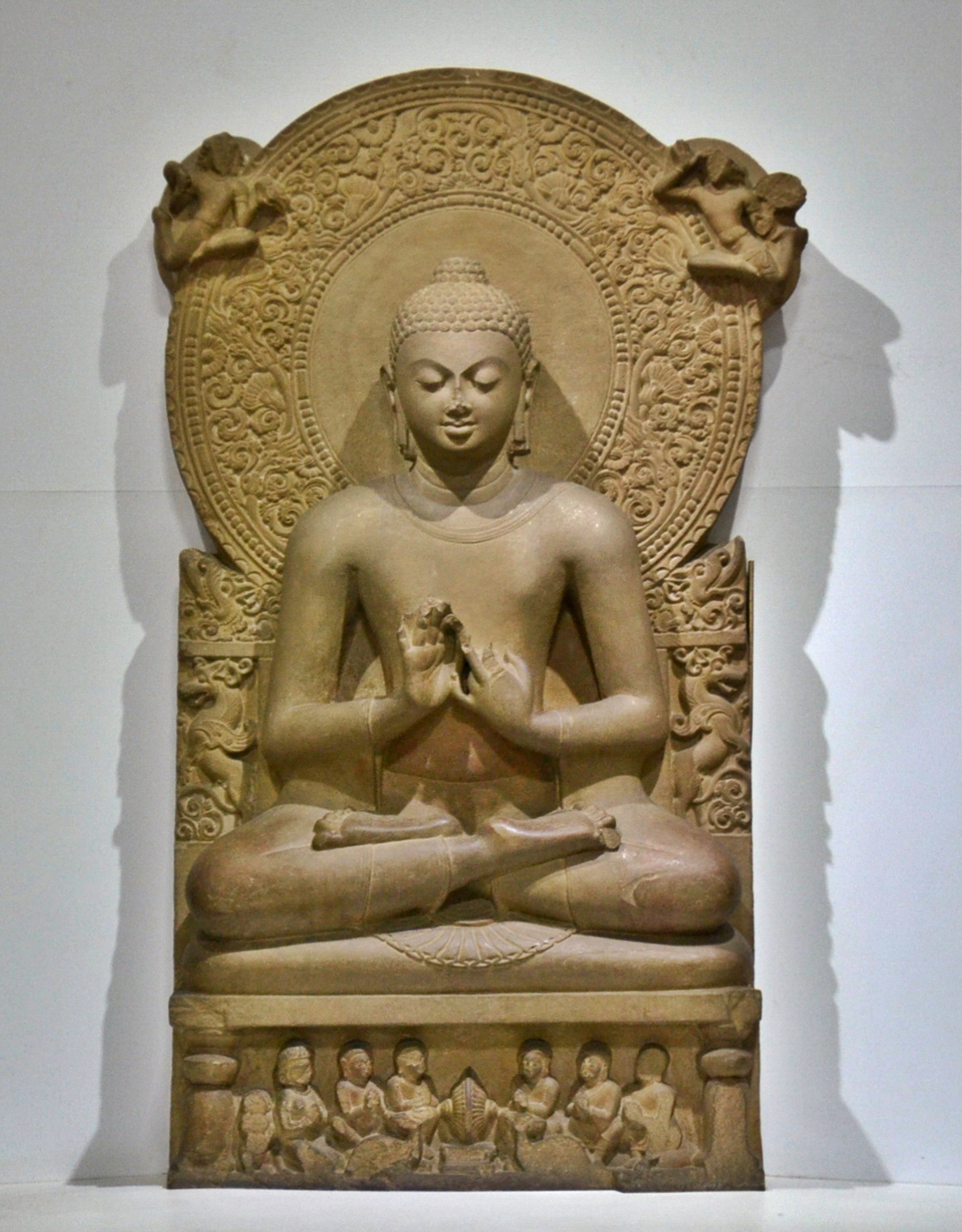
What happened in that deer park is recorded as the Dhammacakkappavattana Sutta, the Setting in Motion of the Wheel of Dharma. The Buddha taught his five companions the Four Noble Truths: that suffering exists, that it arises from craving and attachment, that it can end, and that there is a path to that ending. He then described the path itself, the Noble Eightfold Path, covering right understanding, right intention, right speech, right action, right livelihood, right effort, right mindfulness, and right concentration. These five men became the first members of the Saṅgha, the community of practitioners that would carry the Dharma across Asia over the following centuries.


The Dhamek Stupa that stands at Sarnath today, a cylindrical sandstone tower about 43 metres tall built during the Gupta period, marks the spot where that first sermon was delivered. It is covered in intricate carvings of floral and geometric patterns, and pilgrims have been coming to sit beside it for over fifteen hundred years. The Ashoka Pillar that the emperor Aśoka erected nearby in the 3rd century BCE once bore a four-lion capital that now serves as the national emblem of Bhārat, its Dharma Chakra reproduced at the center of the national flag. The connection between the Buddha’s teachings and the modern Indian state is written, quite literally, into the symbols that represent it.
How Bhārat Remembers
Buddha Purnima became a national public holiday in Bhārat largely due to the efforts of B. R. Ambedkar, the principal architect of the Constitution of India, who converted to Buddhism in October 1956, along with hundreds of thousands of followers, in a public act of rejection of the caste system that had oppressed Dalits for centuries. Ambedkar saw in the Buddha’s teachings, especially the rejection of birth-based hierarchy and the insistence on the dignity of every person, a philosophical foundation for the equality he had spent his life fighting for. His conversion gave Buddha Purnima a new resonance in modern Bhārat, and the day is now observed with energy and feeling across communities that might otherwise have no connection to the older Buddhist tradition.
The day is marked across the country in ways that range from the quietly personal to the loudly communal. At viharas, Buddhists gather before dawn to hoist the Buddhist flag, listen to monks recite sutras, meditate, and observe special moral precepts. Many prepare kheer, the sweetened rice pudding, as a direct echo of Sujata’s offering to the famished Siddhartha on the eve of his enlightenment. It is served in temples and shared between families, a small, sweet ritual connecting the present moment to a night more than two thousand five hundred years ago.
.jpg)
The three great sites associated with the Buddha’s life in Bhārat, Bodh Gaya in Bihar, Sarnath in Uttar Pradesh, and Kushinagar, also in Uttar Pradesh, where the Buddha attained his final Mahāparinirvāṇa, draw especially large gatherings on this day. Pilgrims arrive in the thousands, some from very far away, to sit beneath the Bodhi Tree, to circumambulate the Dhamek Stupa, or to stand at the site where the Tathāgata breathed his last. In Darjeeling and the hill districts of West Bengal, colorful processions wind through the streets, banners catching the mountain wind over lanes that look out onto the Himalayan foothills. Buddhist monasteries in Delhi, Mumbai, and other cities open their doors for cultural programs, prayers, and communal meals.
A Festival Without Borders
The moon of Vaisakha is not watched from Bhārat alone. Across Asia, the same event is observed under a dozen names, each tradition carrying its own character while honoring the same life. In Sri Lanka, Vesak stretches into a two-day celebration filled with thoranas, towering illuminated structures that line the streets depicting scenes from the Jātaka tales, and dansälas, roadside stalls offering free food and drink to every passerby as an act of generosity. In Thailand, where the day is called Visakha Bucha, its most striking moment comes at dusk, when monks and laypeople join a candlelit procession called wian tian, walking three times clockwise around the temple hall in reverence for the Buddha, his teachings, and the monastic community.
In Myanmar, the festival falls on the Full Moon Day of Kason, and its centrepiece is the Nyaungye-thun, the Bodhi tree water-pouring ceremony. Devotees carry clay pots filled with scented water and pour them at the roots of pipal trees across the country, a gesture of gratitude for the tree beneath which the Buddha awakened. In Nepal, where the Buddha was born, the day is known as Buddha Jayanti, and pilgrims converge on Lumbini from across the world to walk its sacred grounds and light butter lamps. Tibet observes not just a day but an entire lunar month, Saga Dawa, considered the holiest period in the Tibetan calendar, when pilgrims circumambulate Mount Kailash and enormous prayer flags are raised at Tarboche, their mantras carried by the mountain wind across the Himalayas.
East Asian traditions carry a different flavour. Japan celebrates on April 8th, a fixed Gregorian date adopted during the Meiji era, calling the occasion Hanamatsuri, the Flower Festival, where worshippers ladle sweet hydrangea tea over a small bronze statue of the infant Buddha in re-enactment of the legend that fragrant rain fell from the heavens at the moment of his birth. In South Korea, the Yeondeunghoe Lotus Lantern Festival sees tens of thousands of intricately crafted paper lanterns fill the streets of Seoul in a grand procession with roots stretching back twelve hundred years to the Silla dynasty, inscribed by UNESCO on its Intangible Cultural Heritage list. And at Borobudur in Indonesia, the world’s largest Buddhist monument, thousands of monks in saffron robes walk in procession between ancient temples before releasing sky lanterns into the darkness as prayers for peace.


The three events that Buddha Purnima commemorates follow the arc of a single remarkable life, from birth in a garden to the stillness beneath a tree to a last breath in a forest grove. That tradition holds all three to have happened on the same full moon is a way of saying something deeper than coincidence: that birth, awakening, and passing away are not separate events but parts of one whole. What the Buddha found at Bodh Gaya was not only a personal liberation but a teaching he spent the next forty-five years carrying across the subcontinent, speaking to anyone who would listen, from kings to ascetics to farmers by the road.
This year, Buddha Purnima falls on May 1. Across Bhārat and throughout Asia, millions will mark the day in ways that differ in language, landscape, and custom, but share the same thread. The full moon of Vaisakha has risen over this part of the world for more than two and a half thousand years, and it will rise again then, over Bodh Gaya and Sarnath and Kushinagar, over the lantern-lit streets of Seoul and the candlelit temple halls of Bangkok, over every vihara and every family that prepares a bowl of kheer and pauses, for a moment, to remember.