As we write this, the Indian Premier League 2026 is in full swing, building toward its finale. Cricket grips Bhārat like nothing else, and her men’s and women’s teams have won on every international stage, from the men’s 2025 Champions Trophy and 2026 T20 World Cup to the women’s maiden ODI World Cup title in 2025. But cricket did not originate here. Kabaddi, polo, kho-kho, and kushti did, born from this land’s warrior traditions and village rhythms, and now played far beyond her borders.
Kabaddi: The Game of a Single Breath
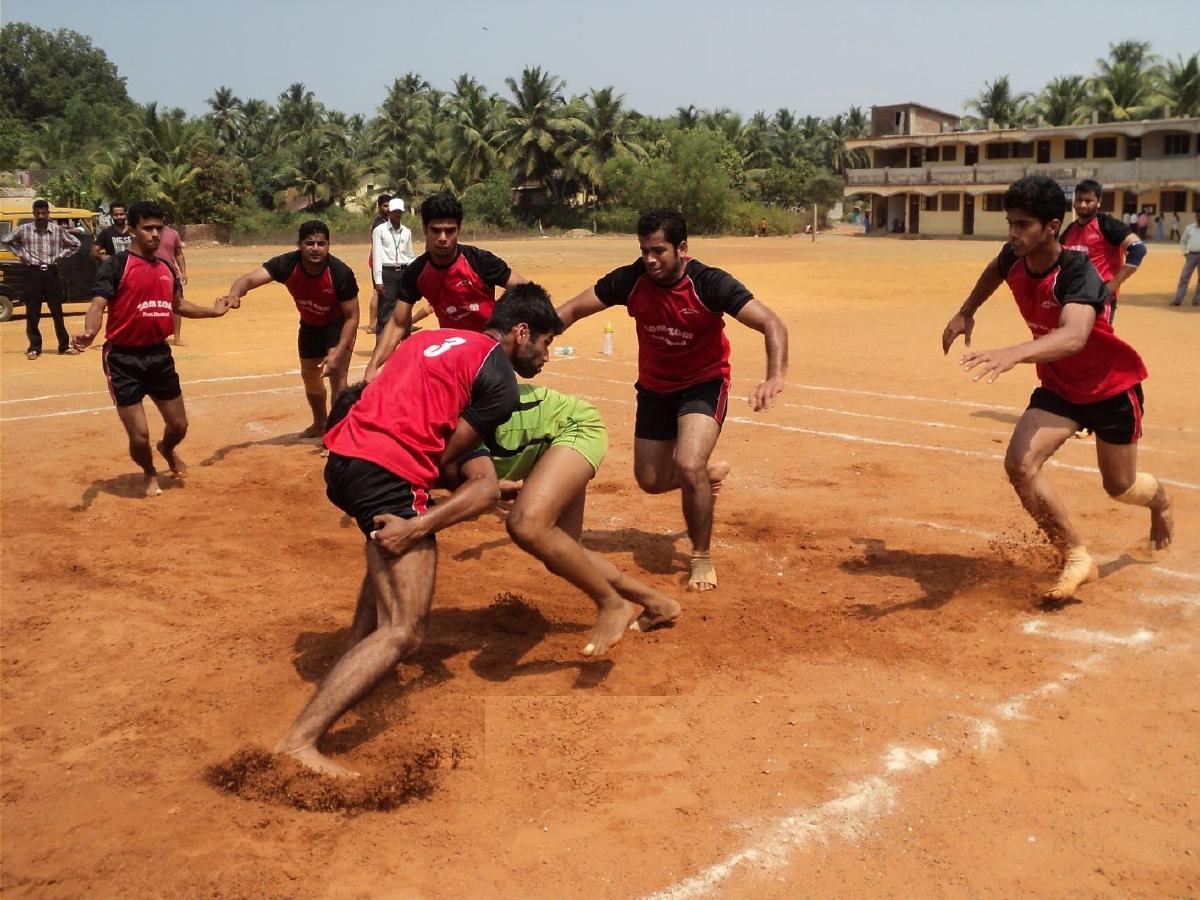
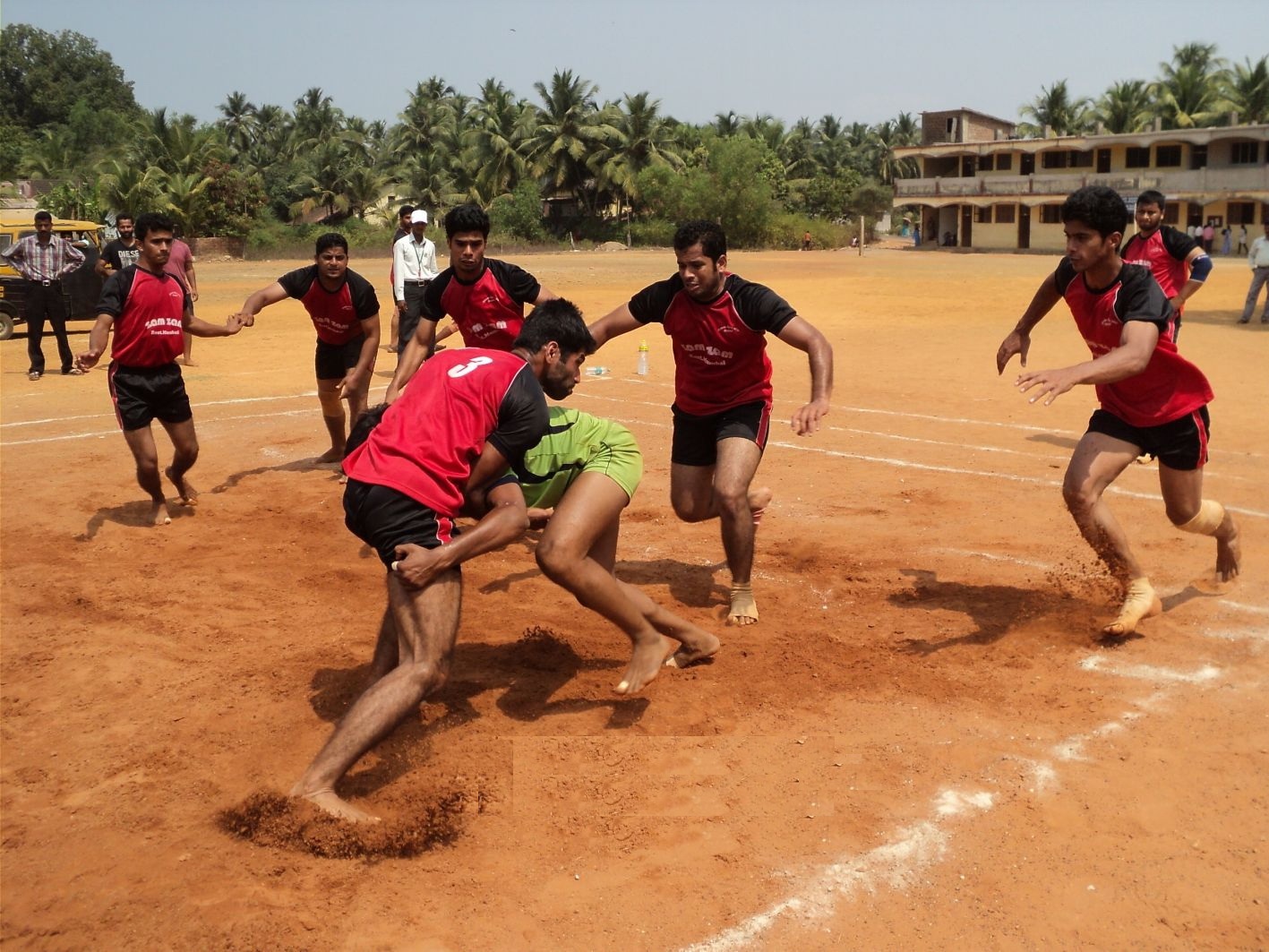
Of all the sports that Bhārat has given the world, kabaddi may be the most distinctive. At its heart, the game is simple: one player, called the raider, crosses into the opposing half, tries to tag as many defenders as possible, and must return to their own side before running out of breath. The catch is that to prove they have not taken a breath, the raider must keep chanting “kabaddi, kabaddi, kabaddi” the entire time. What results is a thrilling, intimate contest that mixes the explosiveness of a sprint, the calculation of a wrestling match, and the drama of holding on just a little longer.
The game is ancient. Accounts in the Mahābhārata describe Arjuna performing a solo raid into an enemy formation, a narrative that feels unmistakably like early kabaddi. Some historians trace the sport’s origins as far back as 4,000 years, and many believe it first took shape in Tamil Nadu. The name is thought to come from the Tamil words for “hand” and “to catch,” though the game has roots across the subcontinent and has been played under different names in different regions, including “hu-tu-tu” in Maharashtra and “hadudu” in Bangladesh.
.jpg)
For most of its history, kabaddi was a village game, played on dusty grounds and during festivals. The first organized competitions appeared in the 1920s, and the sport was included in the South Asian Games by the middle of the 20th century. Kabaddi made its Olympic appearance as a demonstration sport at the 1936 Berlin Games and has featured at the Asian Games since 1990. Bhārat has dominated kabaddi at the Asian Games, winning gold in nearly every edition, though Iran memorably claimed both the men’s and women’s titles in 2018 before India bounced back to win both in 2022.
Today, kabaddi is also a professional spectacle. The Pro Kabaddi League, launched in 2014 on the model of the Indian Premier League, transformed the sport into a prime-time television event with franchise teams, star players, and massive viewership. In its first season, it drew more viewers per match than any Indian sporting league other than cricket. A game born in open fields has found its way into packed arenas.
Sagol Kangjei: Polo’s Ancient Home
High in the hills of Manipur, in the far northeast of Bhārat, a sport called Sagol Kangjei has been played for at least 1,500 years. Players on small, sturdy horses native to the region, known as Manipuri ponies, charge across a wide field striking a bamboo root ball with a cane stick. The word “kangjei” means stick-ball game in the Meitei language, and the game was woven into the spiritual and cultural life of the Meitei people long before anyone outside the valley knew it existed.
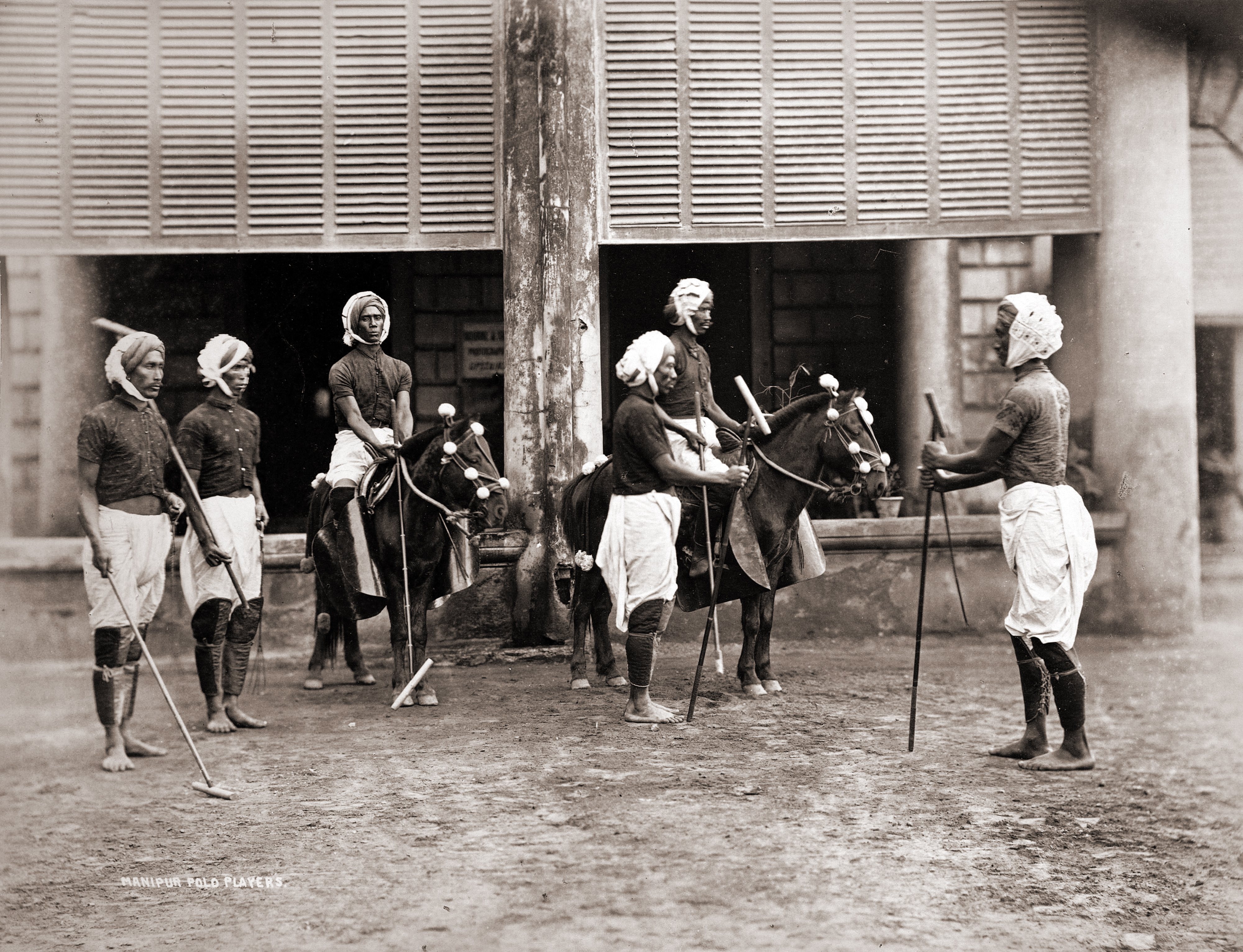
When British officers arrived in Manipur in the 19th century, they encountered the game and were immediately captivated. The first organized polo club in the world was founded in Silchar, Assam, in 1859, just a short journey from Manipur, using the local game as its foundation. British soldiers and colonial administrators brought polo home to England, where it was codified, refined, and eventually spread across the British Empire and beyond. The word “polo” itself is thought to come from the Tibetan “pulu,” meaning ball, while the first English rules of polo were written using the Manipuri game as their model.
The rest of that history is well known: polo is now played from Buenos Aires to Windsor, regarded as a sport of aristocrats and ambassadors. But its home, the small kingdom of Manipur, remains its spiritual heart. The Manipur Polo International tournament, held annually at the Mapal Kangjeibung in Imphal, claims to be played on the world’s oldest polo ground, a field that has been used for centuries and still draws players from across the globe.
Kho-Kho: The Art of the Chase
If kabaddi is about the moment of confrontation, kho-kho is about the art of escape. In this fast-moving team game, eight players from one team sit cross-legged in a row down the centre of the field, alternating the direction they face, while three members of the opposing side try to avoid being tagged by a single chasing player. The chasing player can transfer the pursuit to any seated teammate by touching them and calling “kho!”, making the game a frantic, shifting spectacle in which the direction of danger changes in an instant.


Kho-kho is believed to have been played in various forms since at least the 4th century BCE, and certain passages in the Mahābhārata are thought to describe an early version. In ancient times, a version called Rathera may have been played on chariots, with players mounted rather than seated on the ground, the word “ratha” meaning chariot in Sanskrit. The modern form of the game was formalized in the early 20th century: its rules were standardized by the Deccan Gymkhana in Pune in 1914, and the first rulebook was written by Bal Gangadhar Tilak, the great independence leader and editor, who apparently had a gift for sport as well as politics.
Kho-kho has long been one of the most popular sports in Indian schools and villages. In recent years it has also made a bid for the international stage. The Ultimate Kho Kho league, launched in 2022, brought fresh energy and professional investment to the sport. The first Kho Kho World Cup was held in New Delhi in January 2025, with teams from multiple continents participating, a remarkable journey for a game whose name was once known only within a few hundred kilometres of where it was born.
Kushti: Wrestling as a Way of Life
Long before modern gyms, there were the akharas of Bhārat: open-air wrestling pits filled with red earth, where men trained for hours each day in a tradition that stretched back to antiquity. Kushti, as the sport is commonly known, traces its roots to malla-yuddha, a form of combat wrestling described in texts as old as the 5th millennium BCE and given detailed treatment in the 13th-century treatise Malla Purana. The Ramayana features the mighty wrestler Vali and the Mahabharata describes the Pandava hero Bhima as a wrestler of extraordinary power. In ancient Bhārat, wrestling was not merely a sport but a path to discipline, devotion, and physical mastery.

The form of wrestling practiced today developed further during the Mughal era, blending the older malla-yuddha tradition with Persian-influenced wrestling to create pehlwani. A wrestler, called a pahalwān, follows a demanding regimen of diet, training, and discipline. Traditional foods like ghee and almonds are consumed in specific quantities. Daily training includes hundreds of repetitions of the dand, a deep push-up, and the baithak, a full squat, along with long sessions of grappling in the pit. The life of a pahalwān is almost monastic in its structure, a dedication of the whole self to the art.
Kushti’s most celebrated figure in modern memory is Gama Pehlwan, widely regarded as one of the greatest wrestlers who ever lived. Born in Amritsar in 1878, Gama went undefeated in a career spanning more than fifty years, taking on challengers from Russia, Japan, Poland, and the United States. In 1910, he defeated the world champion Zbyszko in London, cementing a legend that still echoes in the akharas of Varanasi and Delhi. Modern Bhārat has carried this tradition to the Olympics as well, with wrestlers like Sushil Kumar, Sakshi Malik, and Bajrang Punia winning medals on the world’s biggest stage.
The sports that Bhārat invented stretch even beyond these four. Pachisi, the ancient cross-and-circle board game played on royal courts since at least the 4th century CE, became the ancestor of Ludo and is played by children on every continent. Gyan Chauper, a medieval moral teaching game played with dice on a grid of virtues and vices, was carried to England in the 19th century and became Snakes and Ladders. And chess made its long journey from Gupta-era chaturanga to a global phenomenon that the country’s own players now dominate. What ties all of these games together is the spirit in which they were born: not from commercial ambition, but from the rhythms of daily life, the need to train the body, to teach the young, and to celebrate together in the open air. That spirit is as present in a modern kabaddi arena as it was in a dusty village field two thousand years ago.