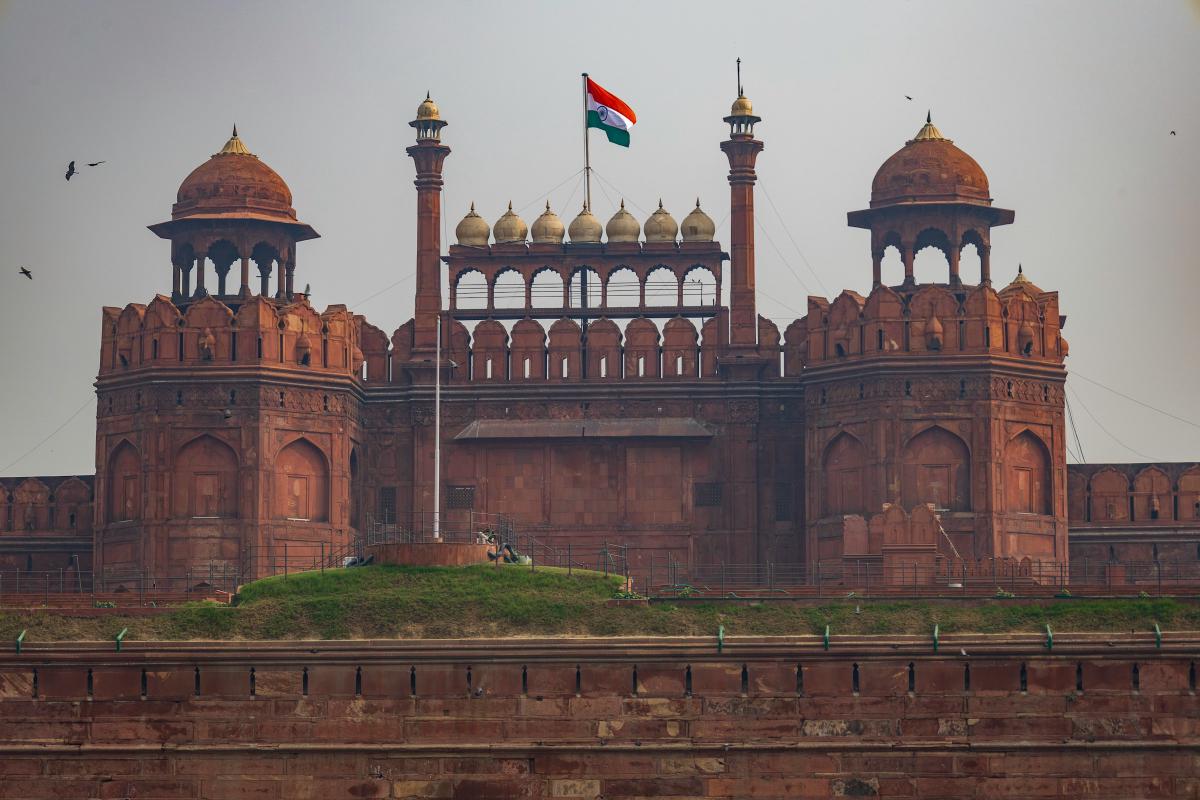
Delhi, the heart of Bhārat, is a vibrant city where ancient history meets modernity. Built on the legendary foundation of Indraprastha from the Mahabharata era and the remnants of at least seven historical cities, each contributing to its rich cultural heritage. Let’s journey through time and explore these seven cities that form the foundation of modern Delhi.
Before the historical cities we know, Delhi’s origins are mythological. The Mahabharata places Indraprastha here, the magnificent capital of the Pandavas, built on the banks of the Yamuna. Though Indraprastha exists more in legend than in verified archaeology, some historians and excavations at Purana Qila have hinted at ancient habitation going back thousands of years. This mythic foundation gives Delhi a depth that few cities on earth can claim, a place where the sacred and the historical blur into each other.
Qila Rai Pithora (Lal Kot)
The earliest historic city of Delhi, Lal Kot, was established by the Tomar ruler Anangpal Tomar in the 11th century. The Tomars were a Rajput clan who chose this ridge of the Aravalli hills as their seat of power, leveraging the natural defensibility of the terrain. Anangpal Tomar is also credited with installing the famous iron pillar at the site, though the pillar itself is far older, dating to the Gupta period.
The city was later expanded and renamed Qila Rai Pithora by the Chauhan king Prithviraj Chauhan, one of the most celebrated warrior-kings in Indian history. Prithviraj extended the fortifications significantly and made it a grand capital. His reign, however, ended at the Second Battle of Tarain in 1192, when he was defeated by Muhammad of Ghor, marking a pivotal shift in the subcontinent’s political landscape. The remnants of Lal Kot’s walls, still visible in parts of South Delhi near Mehrauli, echo tales of valor and strategic brilliance from that era.
Mehrauli
The second city, Mehrauli, was founded by the Mamluk dynasty’s first ruler, Qutb-ud-din Aibak, in the late 12th century. The Mamluks, also called the Slave dynasty, were the first rulers of the Delhi Sultanate, and Mehrauli became their capital and their statement of permanence in Hindustan.
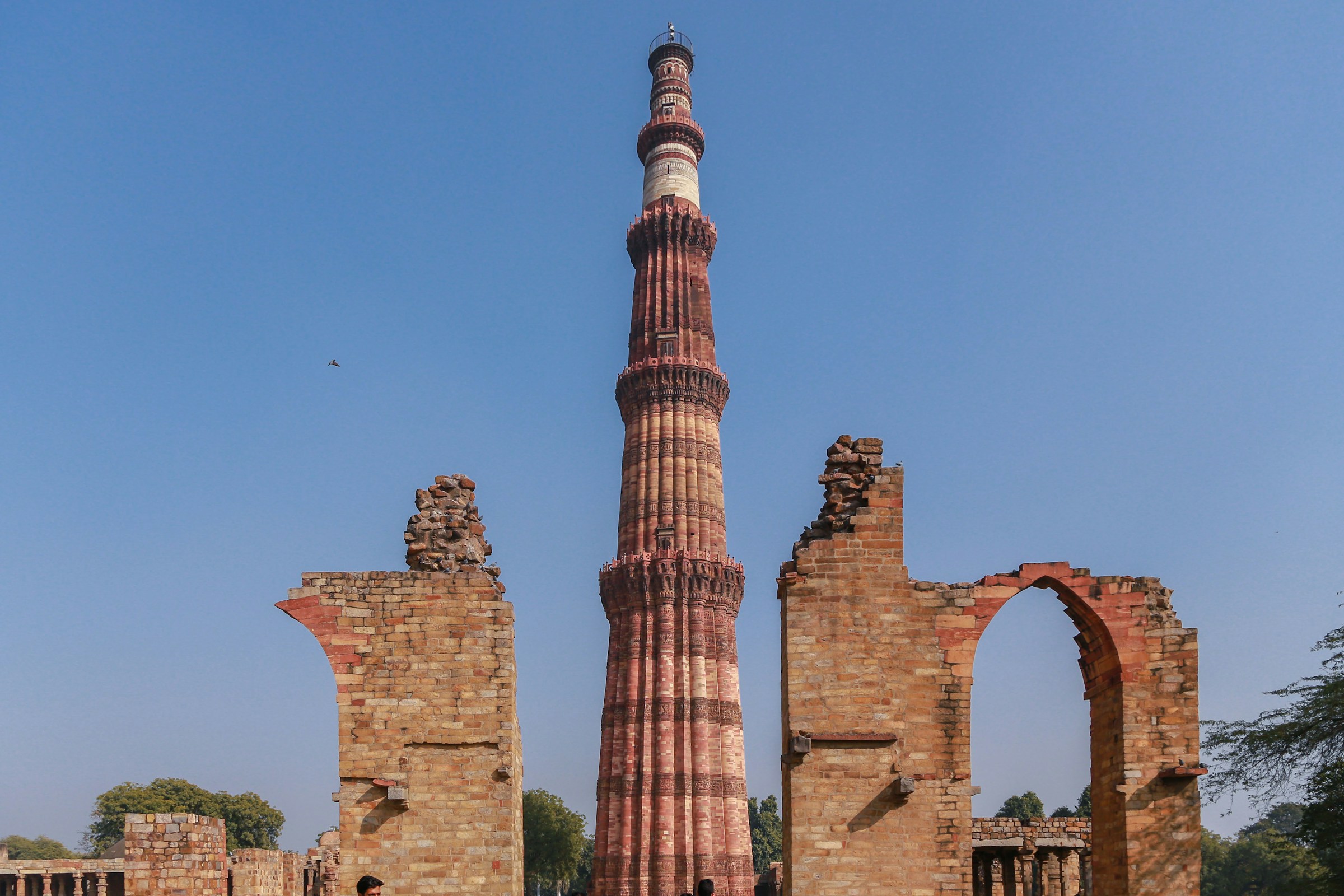
This city is famous for the Qutb Minar, the tallest brick minaret in the world, whose construction was begun by Aibak and completed by his successor Iltutmish. The Qutb Minar Complex is a UNESCO World Heritage Site and contains the ruins of what was once the Quwwat-ul-Islam Mosque, built using materials from demolished Hindu and Jain temples, making it a site of layered and contested history.
At the heart of the complex stands the historic iron pillar, renowned for its rust-resistant composition, a metallurgical marvel that has puzzled scientists for centuries. The pillar predates Qutb Minar by more than seven centuries, having been constructed in the early 4th century during the reign of Chandragupta II. It was originally a Garuda dhvaja, a flagpole dedicated to Vishnu, likely brought here from central Bhārat. That it still stands, unbowed and unrusted after 1,700 years, feels like a quiet act of defiance by an older civilization.
Siri
Established by Alauddin Khalji in the early 14th century, Siri was the third city of Delhi. Alauddin Khalji was one of the most militarily ambitious sultans of the Delhi Sultanate, successfully repelling multiple Mongol invasions that had devastated much of Central Asia and Persia. The city served as the administrative and military headquarters of the Khalji dynasty. Alauddin also implemented sweeping economic reforms from here, including price controls that allowed him to maintain a large standing army without bankrupting the treasury.
Though not much remains of Siri today beyond scattered ruins in what is now a modern residential area, Alauddin Khalji’s legacy is visible in the nearby Hauz Khas complex. The “hauz khas” or royal tank was a large reservoir built to supply water to Siri, and Firoz Shah Tughlaq later added a madrasa and tomb to the complex. Today Hauz Khas is better known as a trendy urban village, but the ruins of the medieval reservoir and tomb still anchor it in deep history.
Tughlaqabad
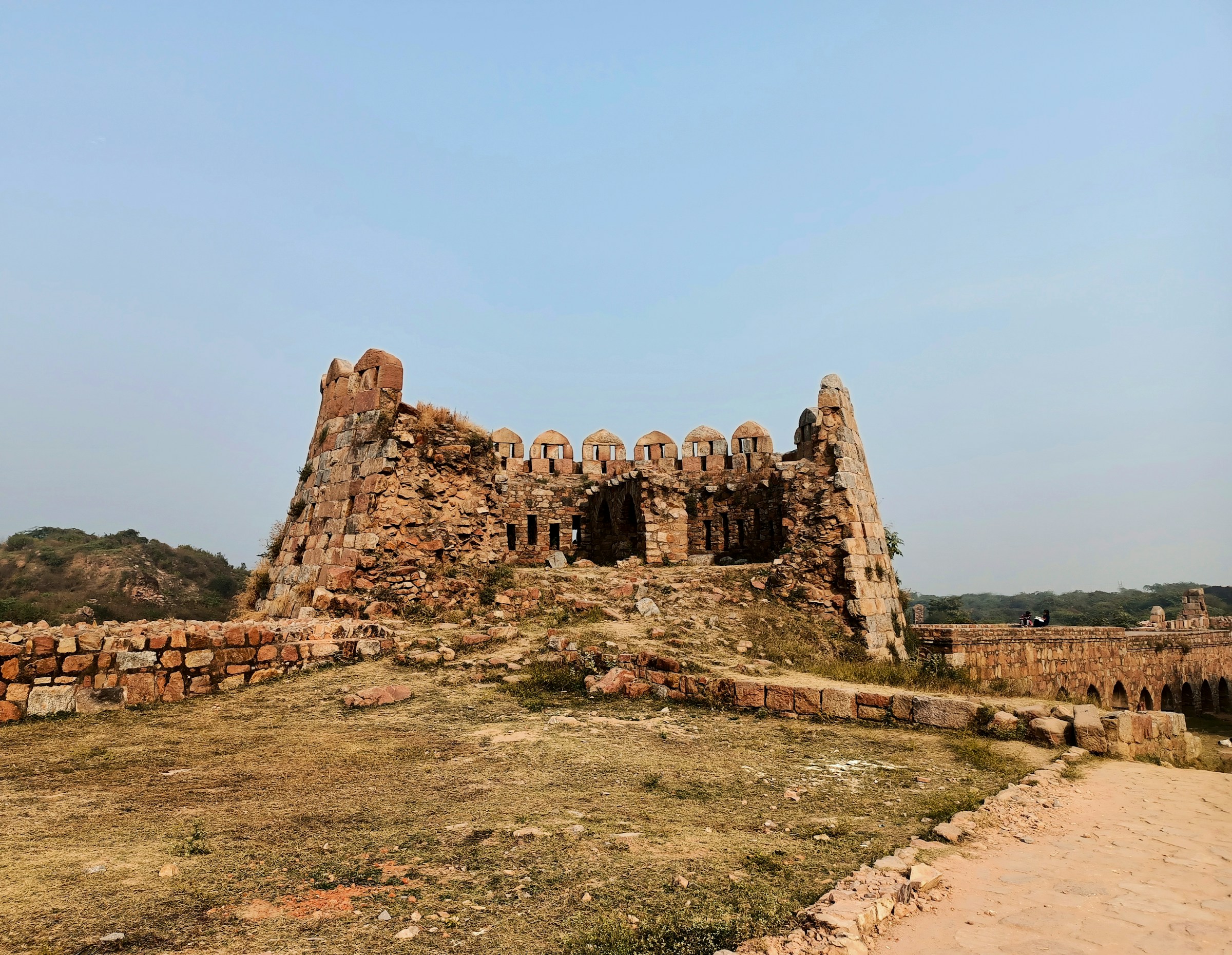
The fourth city, Tughlaqabad, was founded by Ghiyas-ud-din Tughlaq in the 14th century. Where Alauddin Khalji had built Siri to resist the Mongols, Ghiyas-ud-din wanted something even more imposing: a fortified city so massive and impregnable it would announce the power of the Tughlaq dynasty to the world.
The result was extraordinary in scale. Tughlaqabad’s walls stretched for kilometers, its bastions were enormous, and the fort complex included palaces, mosques, granaries, and a citadel. Yet its glory was startlingly short-lived. The city was barely inhabited before it was abandoned, likely due to severe water shortages, the arid terrain proving no match for the ambition of its builders. There is also a famous legend that the Sufi saint Nizamuddin Auliya cursed the city, saying it would be left to the jackals and shepherds, and history seems to have obliged.
Ghiyas-ud-din’s son Muhammad bin Tughlaq succeeded him and became one of the most controversial rulers in Indian history, famous for ill-fated schemes like shifting the capital to Daulatabad in the Deccan. The ruins of Tughlaqabad Fort stand today as a haunting reminder of the Tughlaq dynasty’s ambition and the impermanence of power.
Firozabad
Firoz Shah Tughlaq, a more pragmatic descendant of Ghiyas-ud-din, established the fifth city, Firozabad, in the mid-14th century. Also known as Firoz Shah Kotla, this city stretched along the Yamuna and represented a return to stability after the chaos of Muhammad bin Tughlaq’s reign.
Firoz Shah was a prolific builder and an unusual ruler for his era in that he was deeply concerned with public works: he constructed canals, hospitals, rest houses, and dozens of mosques and palaces. Firozabad was known for its gardens, bazaars, and the remarkable Ashokan pillar brought from Topra in Haryana. Firoz Shah had the ancient pillar carefully transported to Delhi and erected within his fort, displaying a fascinating reverence for ancient monuments even as he built his own. The pillar, inscribed with Emperor Ashoka’s edicts from the 3rd century BCE, is one of the oldest legible texts in the region.
Firoz Shah Kotla today is perhaps best known among Delhiites not for its history but for its legend: the ruins are said to be inhabited by djinn, and every Thursday evening, locals gather there to leave offerings and seek blessings, a living folk tradition that has persisted for centuries alongside the more formal history of the place.
Shergarh (Dinpanah)
The sixth city, Shergarh, also known as Dinpanah, has perhaps the most dramatic origin story of all seven cities. It was initially founded by the Mughal Emperor Humayun in the 16th century, who chose the site of the legendary Indraprastha to build his new capital, naming it Dinpanah, or “refuge of the faithful.”
But Humayun was famously unlucky. Before he could complete his city, Sher Shah Suri, the Afghan general who had risen through his ranks, defeated him and drove him into exile in Persia. Sher Shah then completed the city and renamed it Shergarh, making it his own. In this sense Shergarh is unique among the seven: built by one dynasty, completed and claimed by another. Sher Shah Suri, despite ruling for only five years, proved to be a gifted administrator, constructing the Grand Trunk Road and reforming the revenue system in ways that even Akbar would later adopt.
Today Purana Qila, the Old Fort, stands as a testament to this layered history. Its three majestic gateways, the Humayun Gate, the Talaqi Gate, and the Forbidden Gate, open onto grounds where archaeological excavations have found evidence of habitation stretching back to 1000 BCE, seeming to confirm the Mahabharata connection. The serene lake outside its walls, busy with paddleboats and the sounds of city life, makes it easy to forget you are standing on one of the most historically dense plots of earth in the world.
Shahjahanabad
The seventh city, Shahjahanabad, was built by the Mughal Emperor Shah Jahan in the mid-17th century. Shah Jahan, the builder of the Taj Mahal, wanted a capital worthy of the Mughal Empire at its height, and Shahjahanabad was his answer. Construction began in 1639 and was completed in about a decade, an extraordinary feat for a planned walled city of that scale.
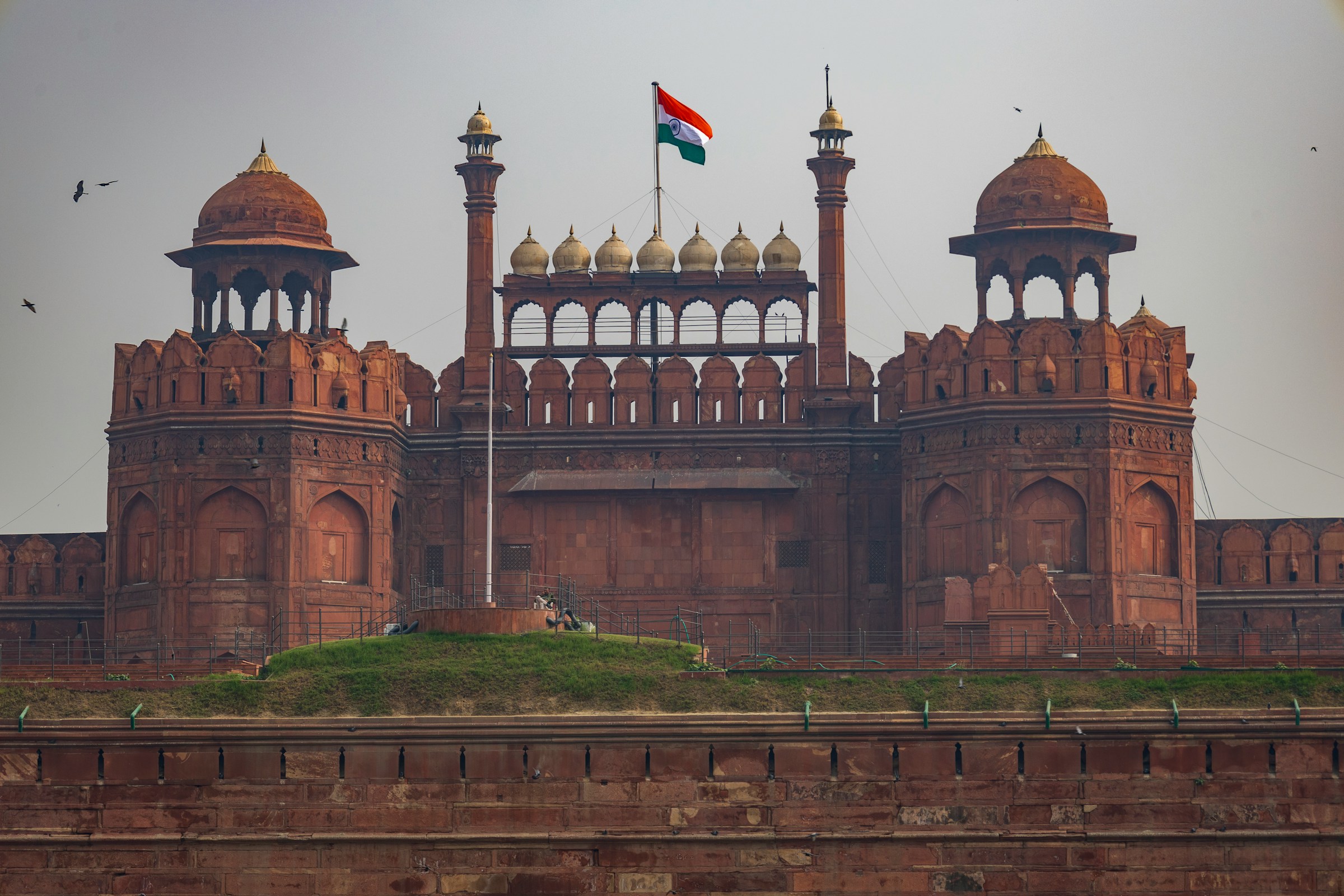
The Lal Qila, or Red Fort, was the ceremonial and political heart of the empire, its red sandstone walls enclosing marble palaces, audience halls, and gardens fed by the Nahr-i-Bihisht, the “stream of paradise,” a channel that brought Yamuna water directly through the royal apartments. Outside the fort, Chandni Chowk, the “moonlit crossroads,” was one of the most important commercial arteries in Asia, where merchants from Persia, Central Asia, and Europe traded alongside local craftsmen. The Jama Masjid, completed in 1656, became the largest mosque in Bhārat, capable of holding twenty-five thousand worshippers.
Shahjahanabad declined after the Mughal Empire weakened, sacked by Nadir Shah in 1739 and later absorbed into British colonial Delhi, which built its own imperial capital, New Delhi, right beside it. Yet Shahjahanabad endures as Old Delhi, chaotic, layered, and alive, its narrow lanes still selling the same spices, textiles, and street food they have for four centuries.
Each of these seven cities has left an indelible mark on Delhi’s landscape and culture. From the Tomars and Chauhans to the Tughlaqs and Mughals, the layers of history are woven into the very fabric of the city. What makes Delhi extraordinary is not that any single civilization built something great here, but that civilization after civilization chose this same stretch of land beside the Yamuna, each building over, around, and despite the ruins of what came before.
Exploring these ancient cities offers a glimpse into the grandeur, resilience, and diversity that define one of the world’s oldest continuously inhabited places. Whether through the rust-free iron pillar, the djinn-haunted ruins of Firoz Shah Kotla, or the still-bustling lanes of Chandni Chowk, the legacy of the seven cities lives on, enriching the soul of Delhi and the story of Bhārat itself.