Bhārat has a long and dramatic geological history, and some of the most fascinating reminders are her meteor craters. These are spots where space rocks struck the Earth millions of years ago, leaving scars that can still be seen today. These craters remind us that Earth is not isolated, but part of a much larger and constantly changing universe.
Lonar Lake, Maharashtra 🔗
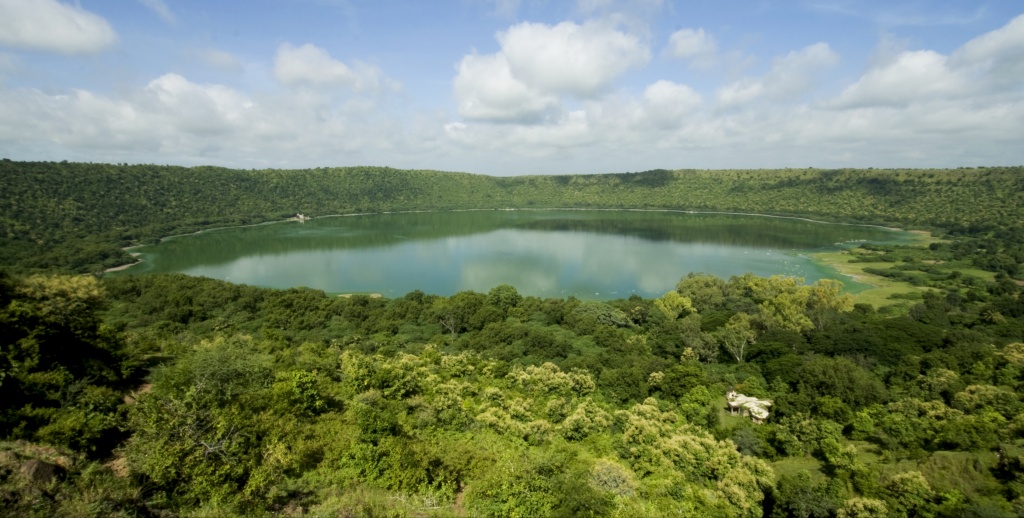

One of the most famous meteor impact sites in Bhārat is Lonar Lake in Maharashtra. Around fifty thousand years ago, a large meteor crashed into the vast basalt plains created by ancient volcanic eruptions. The extreme force of the impact melted the rock, threw up debris, and created a nearly perfect circular crater about 1.8 kilometers wide. Over time, the crater filled with water and became Lonar Lake.
What makes Lonar especially interesting is that its water is both saline and alkaline, something rarely found in natural lakes. The lake also hosts unique microorganisms that thrive in this unusual environment. The crater is surrounded by forests, numerous temples from different centuries, and a rim that still clearly shows the bowl-like shape of the impact.
A local legend tells the story of a demon called Lonasura, who lived in the area and terrorized everyone. He grew so powerful that he even threatened to overthrow the gods. The gods asked Lord Vishnu for help, and Lord Vishnu took human form to slay the demon. This Daitya Sudan (demon slayer) avatar of Lord Vishnu is worshipped in the Daitya Sudan temple in Lonar town. According to the legend, Lonar Lake is the pit where the demon lived, and where Lord Vishnu finally buried him.
Ramgarh Crater, Rajasthan 🔗
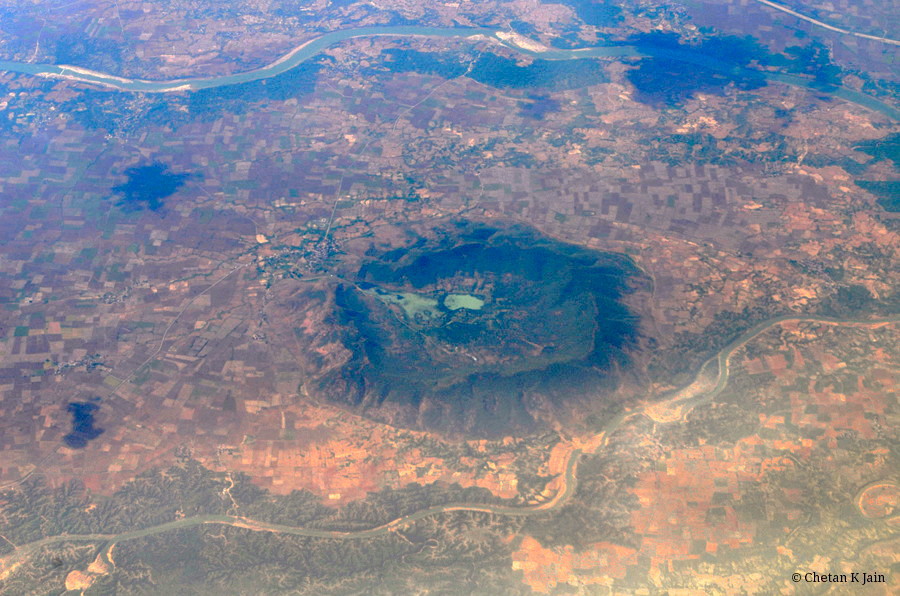

Another important impact site is the Ramgarh crater in southeastern Rajasthan. It is older and more worn down than Lonar, so its shape is not as clear or perfect. The crater is about 3.5 kilometers wide, which makes it much larger than Lonar, even though it is harder to recognize from the ground. For many years, people were not sure whether Ramgarh was really formed by a meteor or by some other natural process. But the discovery of shocked quartz, minerals that form only under extremely high pressure, strongly supports the idea that a meteor strike happened here.
Ramgarh does not have a lake today. Instead, its rim forms a rough circular boundary around small villages and older temples, blending gently into the surrounding landscape. Among these, one of the most striking sights is the Bhand Deva Temple, a beautifully carved 10th-century Shiva temple in the style of Khajuraho, quietly standing within the crater’s natural bowl.
From ground level, the crater can be easy to miss because nature and human use have softened its outline over time. The circular shape becomes much clearer when seen from the air or through satellite images. Ramgarh shows how even a massive impact can slowly fade as millions of years go by.
Dhala Crater, Madhya Pradesh 🔗
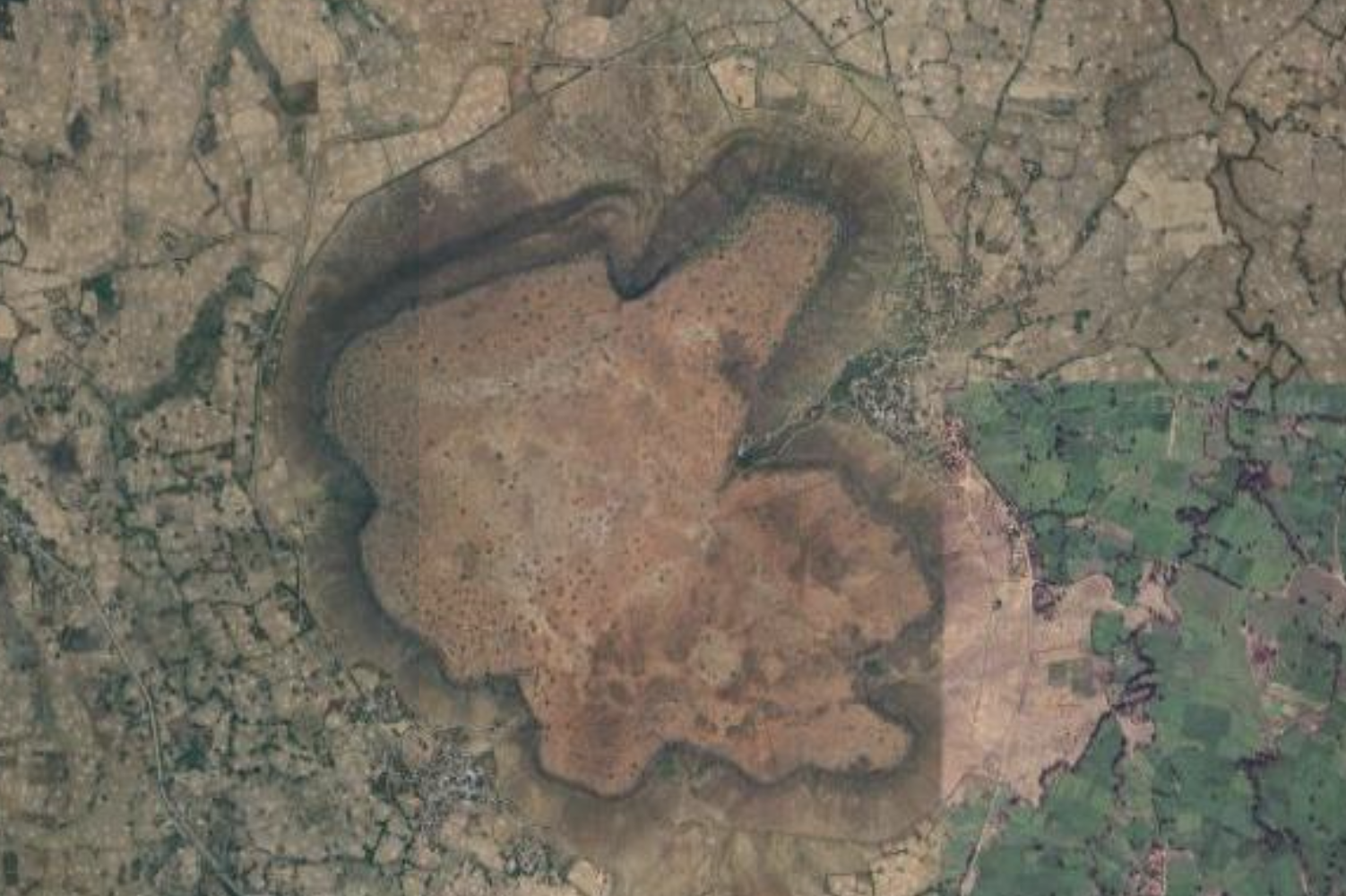
The Dhala crater in Madhya Pradesh is the largest known meteor impact sites in the country. It is roughly 11 kilometers across, making it much larger than Lonar or Ramgarh, but its circular shape is not easy to see on the ground. Scientists have confirmed it as an impact site by studying rocks that show signs of extreme pressure from a meteor strike. The impact is estimated to have occurred more than 2 billion years ago, making Dhala one of the earliest craters formed on the subcontinent.
Today, much of Dhala’s surface is worn down, and the crater is not immediately obvious to visitors. Its outline is mostly visible through satellite images and detailed geological surveys, which reveal the faint but unmistakable circle left by the ancient impact. Despite its subtle appearance, Dhala’s age makes it scientifically valuable. Studying the rocks here helps scientists understand how the subcontinent formed long before humans appeared.
Meteor craters in Bhārat are more than just scientific sites. They are places where stories, legends, and the land itself come together. Local myths grew around them long before science explained their origins. Visiting these craters gives a sense of standing somewhere truly extraordinary, and shows how varied Bhārat’s landscapes are, from the volcanic plains of Maharashtra to the rocky plateaus of Rajasthan and the ancient rocks of central India.
Even though only a few craters are confirmed, each one tells a story of how Earth has changed over billions of years and reminds us that our planet is part of a much bigger universe.