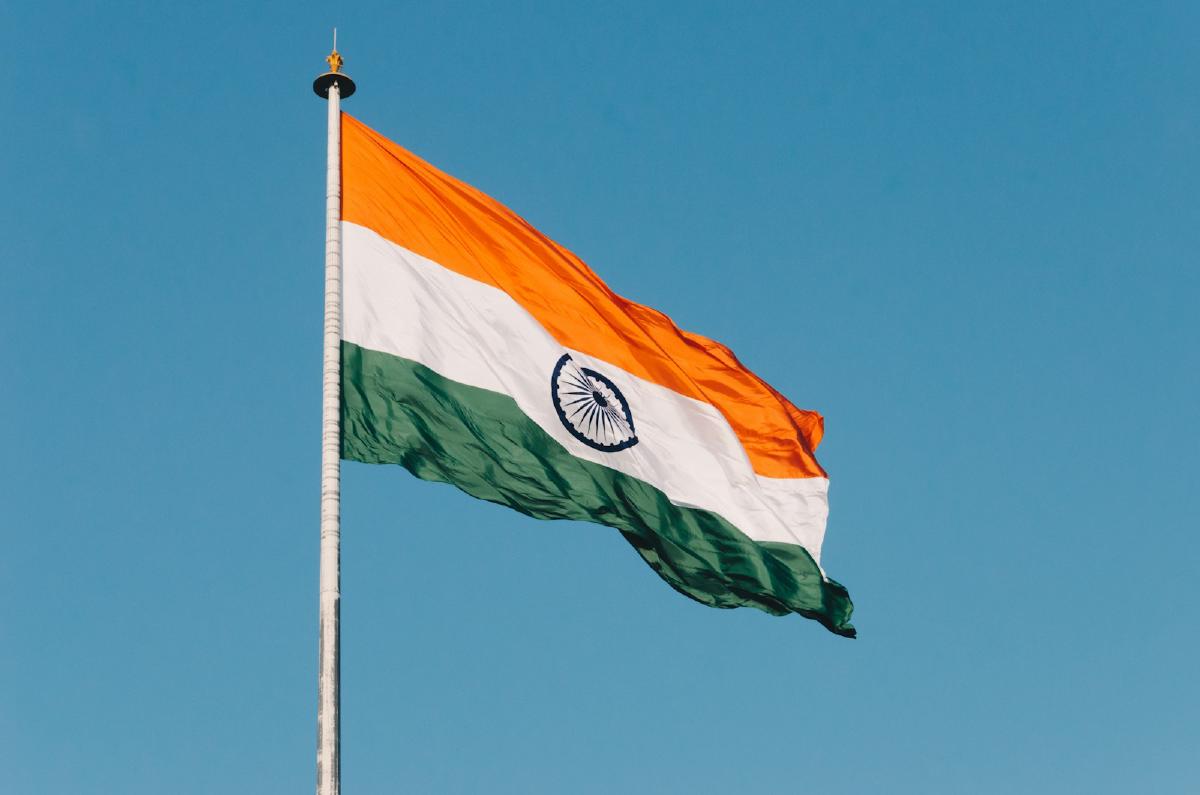
Most countries make do with one name. Some with two. Bhārat has collected at least five, and she has never quite thrown any of them away. Two of them sit side by side in the opening line of her Constitution, one lives on in Urdu poetry and Bollywood songs, and two more survive mostly in scripture and cosmology. Each name arrived from a different direction, carrying a different idea of what this land is, and the argument over which one should come first is very much alive today.
Bhārat: The Name from the Epics
“Bhārat”, or “Bhāratavarsha”, means the “land of Bharata”, and the trouble with tracing it is that there are several Bharatas to choose from. The best known is the legendary emperor Bharata, son of Shakuntala and King Dushyanta, who grew up in a forest hermitage wrestling lion cubs and later became the ancestor of both the Kauravas and the Pandavas. The war they fought is remembered as the Mahabharata, the “great tale of the Bharatas”. In the Jain tradition the honour goes to a different Bharata altogether, the eldest son of the first Tirthankara Rishabhanatha, a chakravartin or universal emperor.


Historians point to an older layer still. The Bharatas were a real people of the Rigveda, a tribe settled around the rivers of the Punjab whose king Sudas won the famous Battle of the Ten Kings against a confederation of rivals. Their victory made them dominant in the region, and their name gradually stretched to cover the land itself. What began as a clan name became a country.
The clearest ancient definition comes from the Vishnu Purana, which describes the land in a single memorable verse:
उत्तरं यत् समुद्रस्य हिमाद्रेश्चैव दक्षिणम् ।
वर्षं तद् भारतं नाम भारती यत्र सन्ततिः ॥
The country that lies north of the ocean and south of the snowy mountains is called Bharata, and its people are the Bharati. It is a definition by landmark rather than by border, and it has aged remarkably well. Several other Puranas repeat the formula almost word for word. The name also turns up in stone. The Hathigumpha inscription, carved into a cave in the Udayagiri hills near Bhubaneswar by the Kalinga king Kharavela sometime around the 1st century BCE, records that he sent an army against “Bharatavasa”.

.jpg)
India: The River That Named a Land
The English name has a much simpler story, and it begins with a river. The Indus was known in Sanskrit as the Sindhu, a word that simply means “river” or “stream”, the way you might call the sea “the water”. The ancient Persians, whose language regularly turned an initial “s” into an “h”, heard Sindhu and said Hindu. When the Achaemenid emperor Darius I pushed east around 516 BCE, the province he annexed on the lower Indus entered Persian records as Hindush.
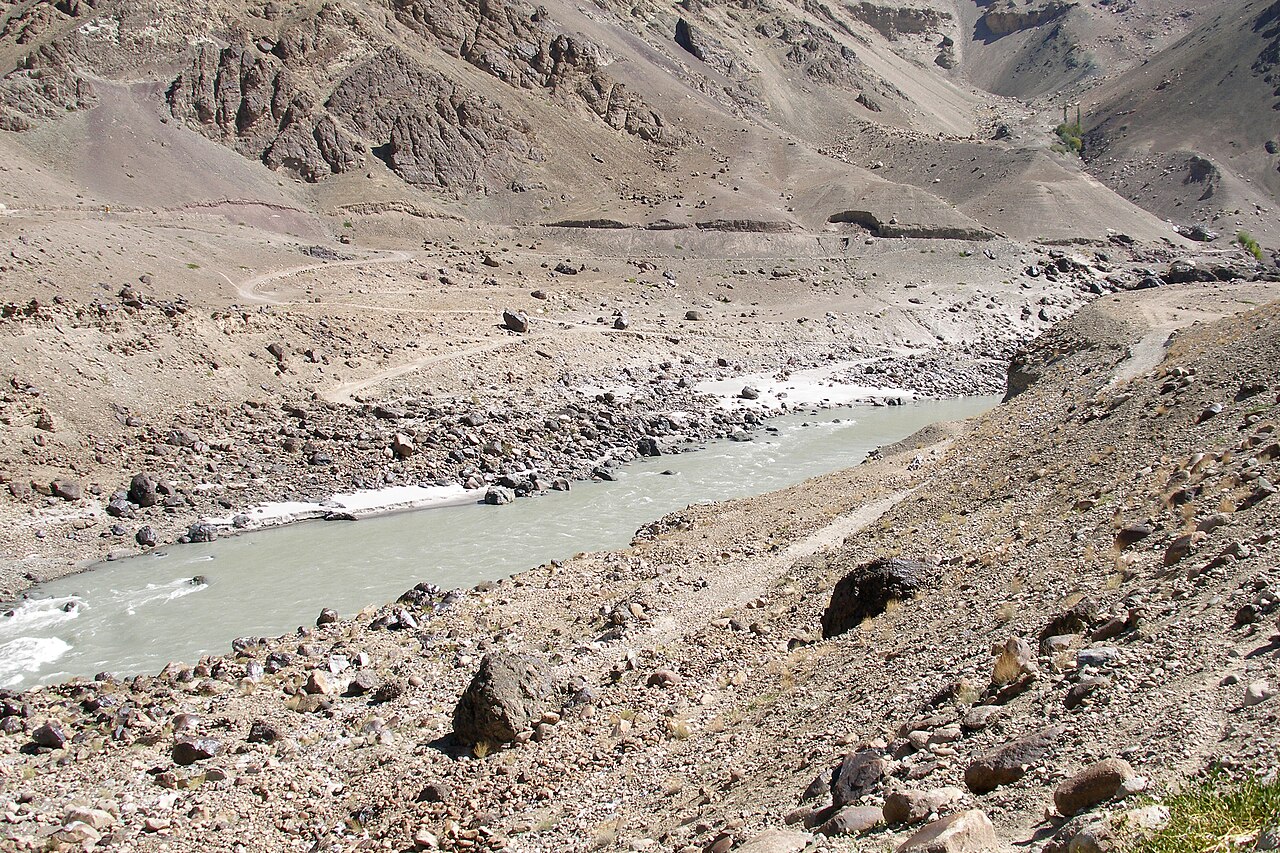

The Greeks, who learned about the east largely through Persia, dropped the “h” that Greek does not much like at the start of a word, and Hindush became Indos. Herodotus, writing around 440 BCE, used “Indian” for the peoples living beyond Persia, and the name kept expanding as Greek knowledge did. When Megasthenes served as an ambassador to the Mauryan court a century later and wrote his account Indica, the word had grown to cover the whole subcontinent down to its southern tip. Latin borrowed it as India, and from Latin it travelled into nearly every European language and eventually onto the passports of a billion and a half people.
So “India” is not, as is sometimes claimed, a British invention. It is a Greek word borrowed from Persian, borrowed from Sanskrit, and it was already two thousand years old by the time the first English ship dropped anchor at Surat. What is true is that the British made it the country’s single official name, which is a rather different thing.
Hindustan: The Name the Persians Kept
Hindustan took the other fork in the road. Where the Greeks carried “Hindu” west and shaved it down to India, Persian kept the “h” and added its own suffix “-stan”, meaning land or place, the same ending you find in Afghanistan and Rajasthan. The result appears in the Naqsh-e Rustam inscription of the Sassanid emperor Shapur I around 262 CE, where the region of Sindh is called Hindustan.


From the 11th century onward, as Persian became the language of administration across northern Bhārat, Hindustan became the everyday name for the land. The Delhi Sultanate used it, and so did the Mughals. Babur opens his description of the country in the Baburnama by noting that Hindustan is bounded by the great ocean on three sides, which is about as neat a definition of a subcontinent as anyone has managed. The name survives beautifully in Urdu. When Muhammad Iqbal wrote his patriotic anthem in 1904, the line that every schoolchild still sings is “Sare Jahan se Accha, Hindostan hamara”, better than all the world is our Hindustan.
The Names We Have Almost Forgotten
Two older names have slipped out of daily speech but never quite vanished. Aryavarta, the “abode of the Arya”, appears in the Vedic and Dharmashastra texts as a term for the northern heartland, roughly the Indo-Gangetic plain between the Himalayas and the Vindhyas. It was always a cultural boundary rather than a political one, marking where a certain way of life was practised, and different texts drew its edges in different places as that world expanded.


Jambudvipa is the more poetic of the two. It combines “dvipa”, meaning island or continent, with jambu, the jamun or Indian blackberry tree, giving us the “island of the jamun trees”. In Hindu, Jain and Buddhist cosmology it is the continent at the centre of the world, and Bharatavarsha sits within it. The name was in real administrative use too. When Ashoka had his edicts carved on rocks across his empire in the 3rd century BCE, he described the gods mingling with the people throughout Jambudipa. Today you will meet the word mostly in temple ritual and in the sankalpa, the declaration of intent a priest recites before a ceremony, where the worshipper’s location is still given as Jambudvipe, Bharatakhande.
“India, That Is Bharat”
When the Constituent Assembly came to settle the country’s name, the draft in front of them was blunt: “India shall be a Union of States.” On 17 September 1949, B. R. Ambedkar moved an amendment adding four words, and the article became “India, that is Bharat, shall be a Union of States.” The debate that followed the next day was long and unusually emotional.
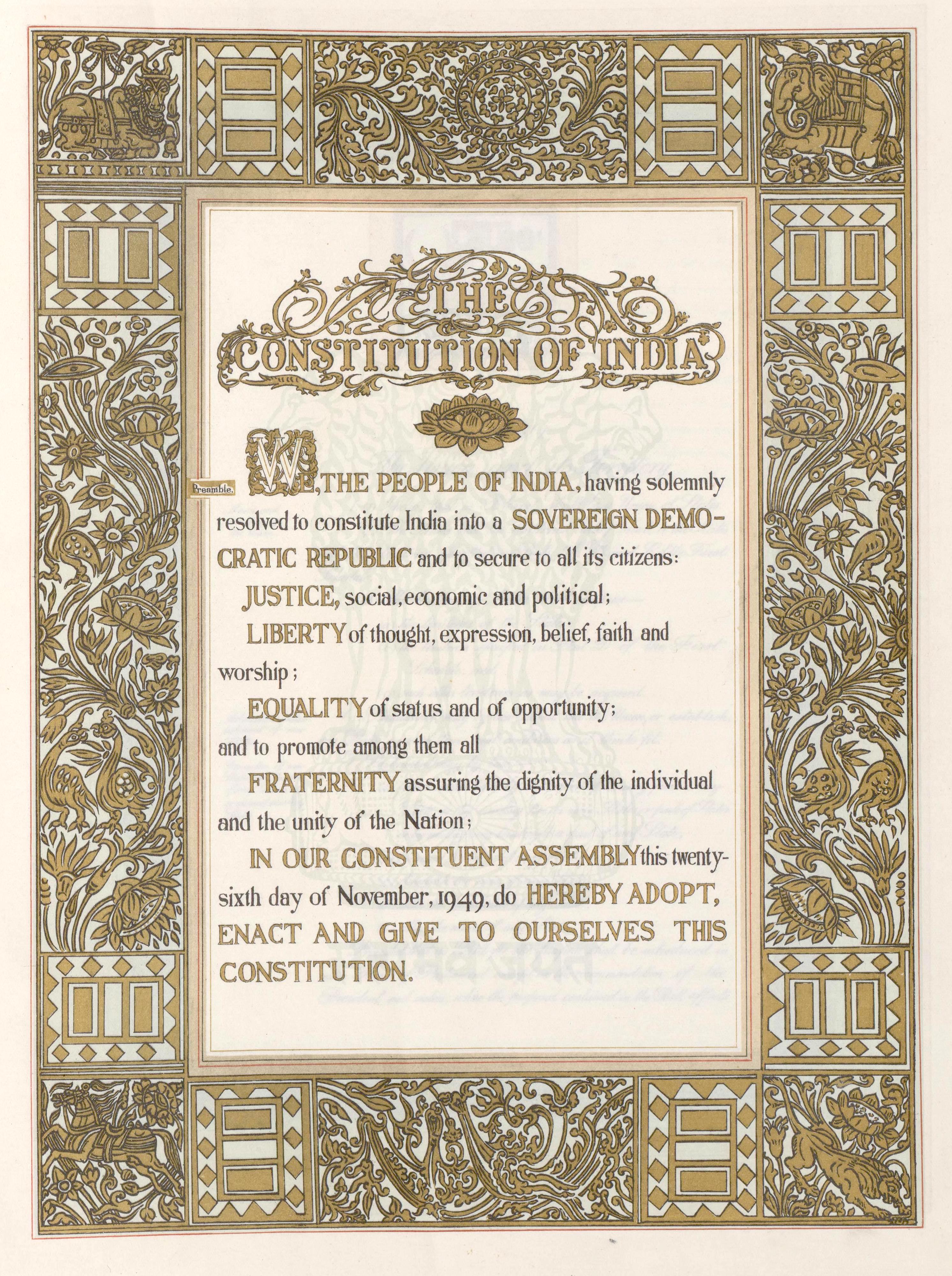

Almost nobody objected to “Bharat”. What they objected to was the order and the phrasing. Hari Vishnu Kamath proposed “Bharat, or in the English language, India, shall be a Union of States”, calling Ambedkar’s version clumsy. Hargovind Pant wanted “Bharat” or “Bharatvarsha” alone. Seth Govind Das argued that “India, that is Bharat” were “not beautiful words for the name of a country” and suggested “Bharat, known as India also in foreign countries”, though he added that he was delighted the country was being given the name Bharat at all. Kamalapati Tripathi backed Kamath’s wording as better suited to the nation’s prestige. Hindustan was raised as well, and quietly set aside.
In the end every rival amendment was withdrawn or voted down, and Ambedkar’s four words carried. The result is a Constitution that gives the country two names of equal legal standing, one of them ancient and indigenous, the other ancient and borrowed, without ever declaring a winner. Jawaharlal Nehru had already made his peace with the arrangement. In The Discovery of India he writes of speaking to village crowds “of this India of ours, of Hindustan and of Bharata”, using all three as if they were simply different windows onto the same room.
The Question Comes Back
The courts have been asked to settle it twice, and twice declined. In 2016 the Supreme Court dismissed a petition seeking to make Bharat the sole official name, with the bench remarking that citizens are free to call the country whatever they wish. In 2020 another bench under Chief Justice S. A. Bobde threw out a similar plea with the obvious observation that India is already called Bharat in the Constitution.


Then came September 2023. Ahead of the G20 summit in New Delhi, invitations went out to visiting leaders for a dinner at Bharat Mandapam, signed not by the President of India but by the “President of Bharat”, Droupadi Murmu. At the summit itself, Narendra Modi sat behind a nameplate reading “Bharat” while the official logo carried both names. The timing was not lost on anyone, since the opposition had grouped itself two months earlier under the acronym INDIA. A month later an NCERT panel recommended that school textbooks switch to Bharat throughout.
Nothing formally changed. Dropping “India” from Article 1 would require a constitutional amendment passed by two-thirds of each House of Parliament, and no such bill has been introduced. What the episode did reveal is how much weight a name can carry. One side hears in “India” the residue of colonial administration. The other points out that the word is older than Rome, and that abandoning it would mean abandoning the Indus itself.
Bhārat’s names are not competitors so much as witnesses. Bhārat remembers a tribe that won a battle by the Ravi three thousand years ago. India remembers a river, and the Greeks and Persians who stood on its bank trying to describe what lay beyond. Hindustan remembers the Persian court poets and the Mughal chroniclers who made this land their subject. Jambudvipa remembers a time when geography and cosmology were the same discipline. A country secure enough to keep all of them is not confused about who she is. She simply has a longer memory than most.