For thousands of years, Bhārat has been a land where people cared deeply about learning. Knowledge was not something kept inside classrooms or textbooks, it was shared in open courtyards, discussed during long walks, and passed from teacher to student with great respect. Long before modern universities appeared elsewhere, Bhārat had already created remarkable centers of study that drew students from many different lands. Among these, four ancient universities, or viśvavidyālaya, stand out for their size, influence, and lasting legacy.
Takṣaśilā: The World’s Earliest Learning City 🔗
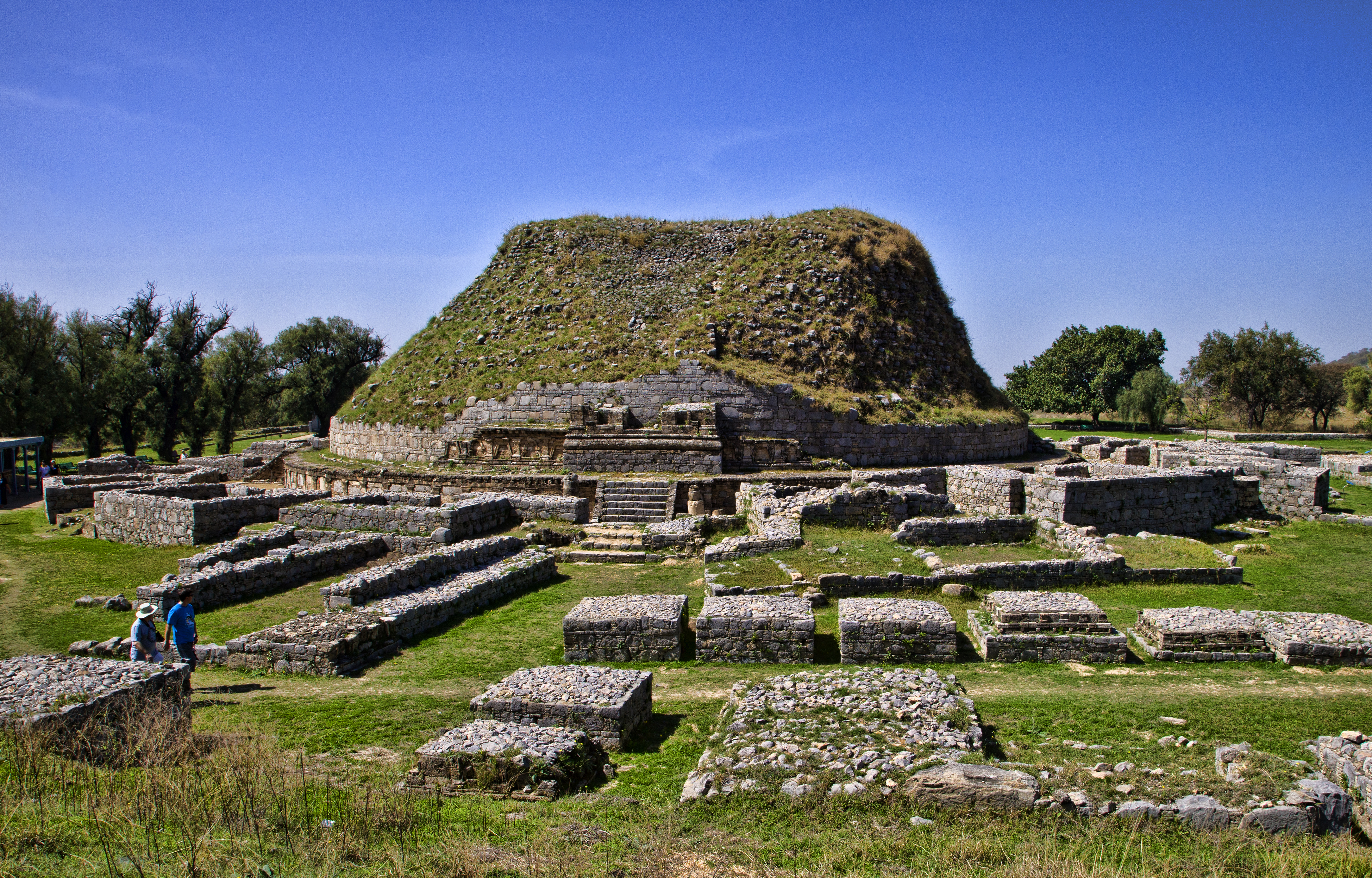

Takṣaśilā, which flourished as early as the 6th century BCE in present-day Punjab, Pakistan, is one of the oldest known centers of learning in the world. It first grew as a Jain seat of study, where monks explored philosophy and ethics. Over the centuries, it became an important Brahmanical center for the Vedas, grammar, politics, and ritual sciences, and later evolved into a major Buddhist hub. This long, layered history made the city a rare meeting ground for multiple traditions of thought.
Its location at the crossroads of three major trade routes, from Pāṭaliputra in the east, Central Asia in the north, and western Asia, turned Takṣaśilā into a magnet for travelers and scholars. Students arrived from Persia, China, Central Asia, and even Greece, drawn by the reputation of its teachers.
Instead of a single campus, Takṣaśilā was a whole city dedicated to learning. Dozens of small schools, each run by a learned guru, offered students the freedom to choose their own path. One might study grammar with Pāṇini, whose Aṣṭādhyāyī one of the most remarkable works in linguistic science. Another could learn politics and strategy under Chanakya, whose teachings helped shape the Maurya Empire. Others trained in medicine following Charaka’s teachings or explored mathematics, philosophy, sculpture, or archery. This mix of disciplines and traditions created a lively, open atmosphere where ideas moved easily between people and schools.
Over time, repeated invasions weakened the city, and by the 5th century CE Takṣaśilā was finally abandoned, nearly a thousand years after its founding. Yet its legacy lived on, influencing educational traditions across Asia for centuries.
Nālandā: A Mahāvihāra of Unmatched Grandeur 🔗
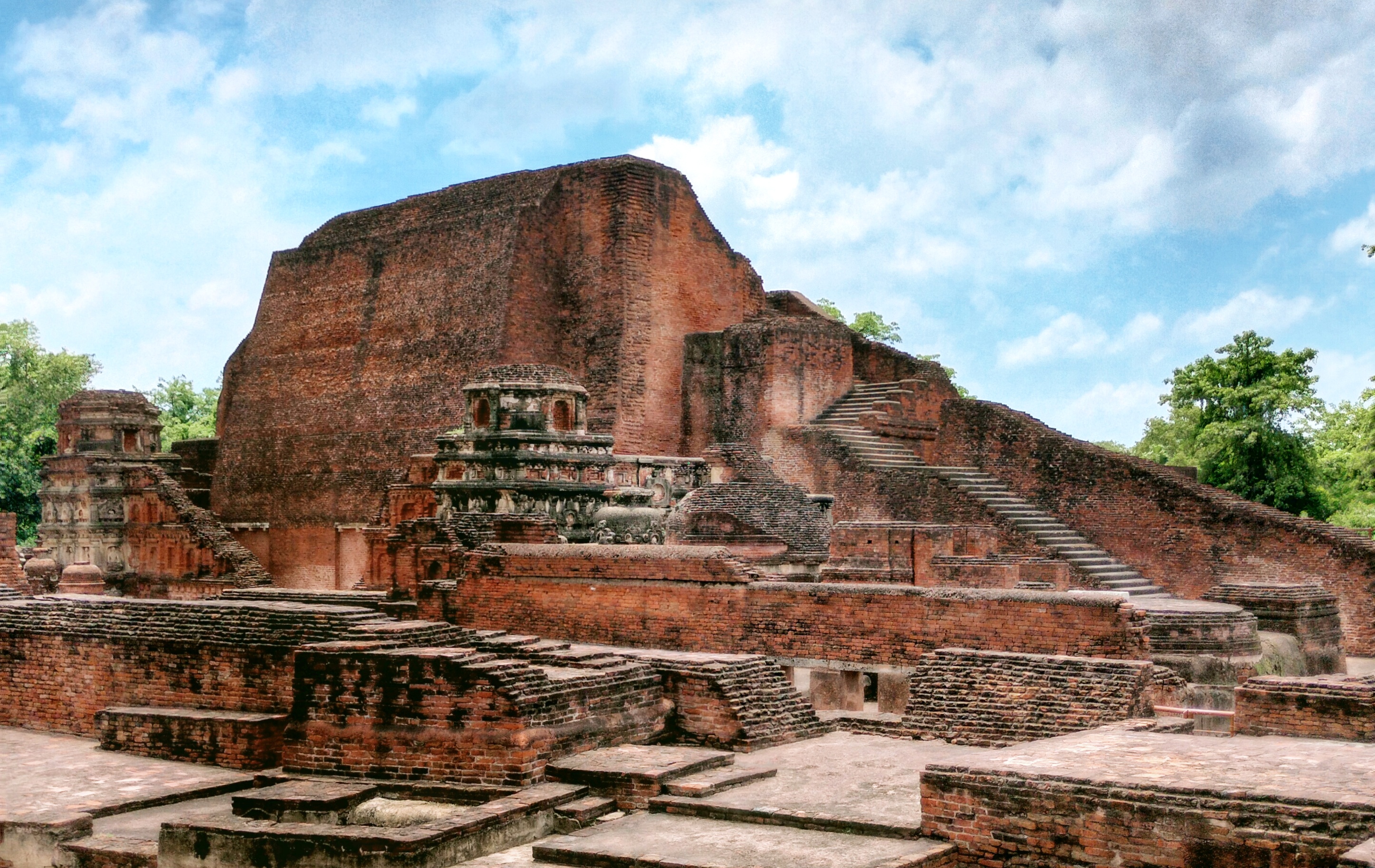

If Takṣaśilā planted the seeds of organized learning, Nālandā turned it into a towering tree. Established around 427 CE by the Gupta emperor Kumaragupta I in the plains of modern-day Bihar, this great mahāvihāra grew into a vast residential university where thousands of monks, scholars, and students lived and studied together. Over many centuries, its quiet courtyards and long brick monasteries became home to some of the sharpest minds of the Buddhist world. Philosophy, logic, grammar, medicine, and astronomy were taught with a discipline and depth that made Nālandā famous across Asia, drawing learners from Tibet, China, Korea, and Southeast Asia.
The scale of Nālandā was unlike anything else of its time. It had multiple monasteries, soaring temples, landscaped gardens, and one of the most remarkable libraries in the ancient world. This great library held countless manuscripts on Buddhist texts, scientific works, and commentaries. Scholars like Dignāga, Dharmapāla, and the celebrated Xuanzang spent years studying or teaching here, shaping Buddhist philosophy for generations to come. Life at Nālandā followed a disciplined routine: debates in the morning, lessons through the day, and long hours in the monastic halls where learning and meditation went hand in hand.
Nālandā thrived for nearly a thousand years, surviving shifts in dynasties and patrons, until repeated invasions in the 12th century finally brought it to an end. Its great library burned for days, and the sprawling campus slowly fell silent. Yet the ideas nurtured within its walls traveled far beyond Bhārat’s borders, influencing Buddhist thought, monastic traditions, and scholarly networks across Asia long after the university itself had faded.
Vikramaśilā: The Rise of Vajrayāna Scholarship 🔗
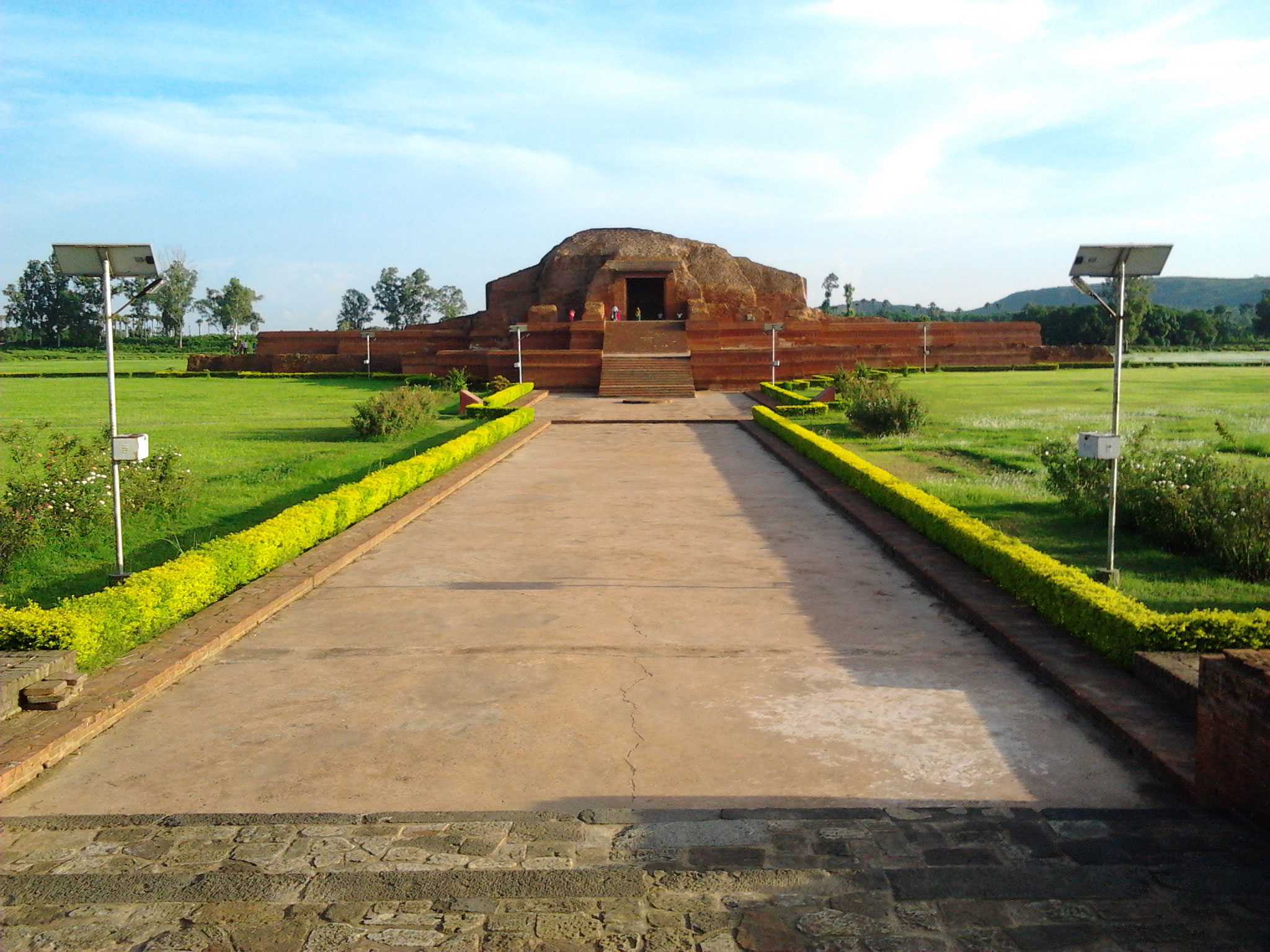

A few hundred years after Nālandā’s founding, in the late 8th or early 9th century, the Pala emperor Dharmapala established Vikramaśilā, near the modern city of Bhagalpur in Bihar, and it quickly emerged as a major center of Buddhist learning at a time when Vajrayāna thought was gaining prominence. It was established partly to restore scholastic rigor, and soon became known for its disciplined approach to philosophy, meditation, and monastic training.
Its students arrived from across the Himalayan world, Tibet, Nepal, and Bhutan, drawn by the reputation of its scholar abbots. Many of these monks later carried Vikramaśilā’s teachings back to their homelands, helping shape the development of Tibetan Buddhism.
The campus was organized around a large central stūpa, with monasteries, lecture halls, meditation rooms, and residential quarters arranged neatly around it. Specialized departments focused on logic, grammar, and tantra, while a strict admission process ensured rigorous standards. The university was also known for its translation bureau, where teams of scholars worked to translate Buddhist texts between Sanskrit and Tibetan.
Like many institutions of its era, Vikramaśilā suffered heavily during the 12th-century invasions, leading to its gradual abandonment. Yet its intellectual spirit survived, preserved in Tibetan monastic universities that drew directly from its traditions.
Valabhi: A Western Hub of Knowledge 🔗
Far to the west, in Gujarat’s Saurashtra region, Valabhi thrived from the 7th to the 12th century CE as an important center for Hīnayāna Buddhist studies. While it is less well-known today, contemporary texts described the education given at Valabhi to be comparable to that provided at Nālandā.
Maitraka kings, who ruled the region, were great patrons of learning and supported the university’s growth. Students came to Valabhi to study political science, statecraft, economics, and administration—fields that made it especially popular among those preparing for public service. At the same time, Buddhist monks studied philosophy, ethics, and dialectics, contributing to lively debates that became the hallmark of the university.
The institution operated through a network of monasteries and teaching halls spread across a bustling port city. Its libraries were known for their collections on law, governance, literature, and Buddhist doctrine, making Valabhi an important hub for manuscript production and exchange. Travelers from across western Bhārat and Central Asia, including the Chinese monks Xuanzang and Yijing, often stopped here, drawn by its reputation for practical learning.
Each of these universities told a different story. Takṣaśilā was a melting pot of ideas at the crossroads of cultures, Nālandā was a grand monastic university that shaped Buddhist thought across Asia, Vikramaśilā specialized in Vajrayāna teachings and rigorous scholarship, and Valabhi focused on Hīnayāna Buddhism and practical governance.
These are only a few of the many centers of knowledge that flourished in ancient Bhārat, but along with others like Sharada Peeth in Kashmir, Somapura Mahavihara in Bangladesh, and Ujjain in Madhya Pradesh, they stand out as shining examples of how deeply the pursuit of wisdom has been woven into the fabric of this land.